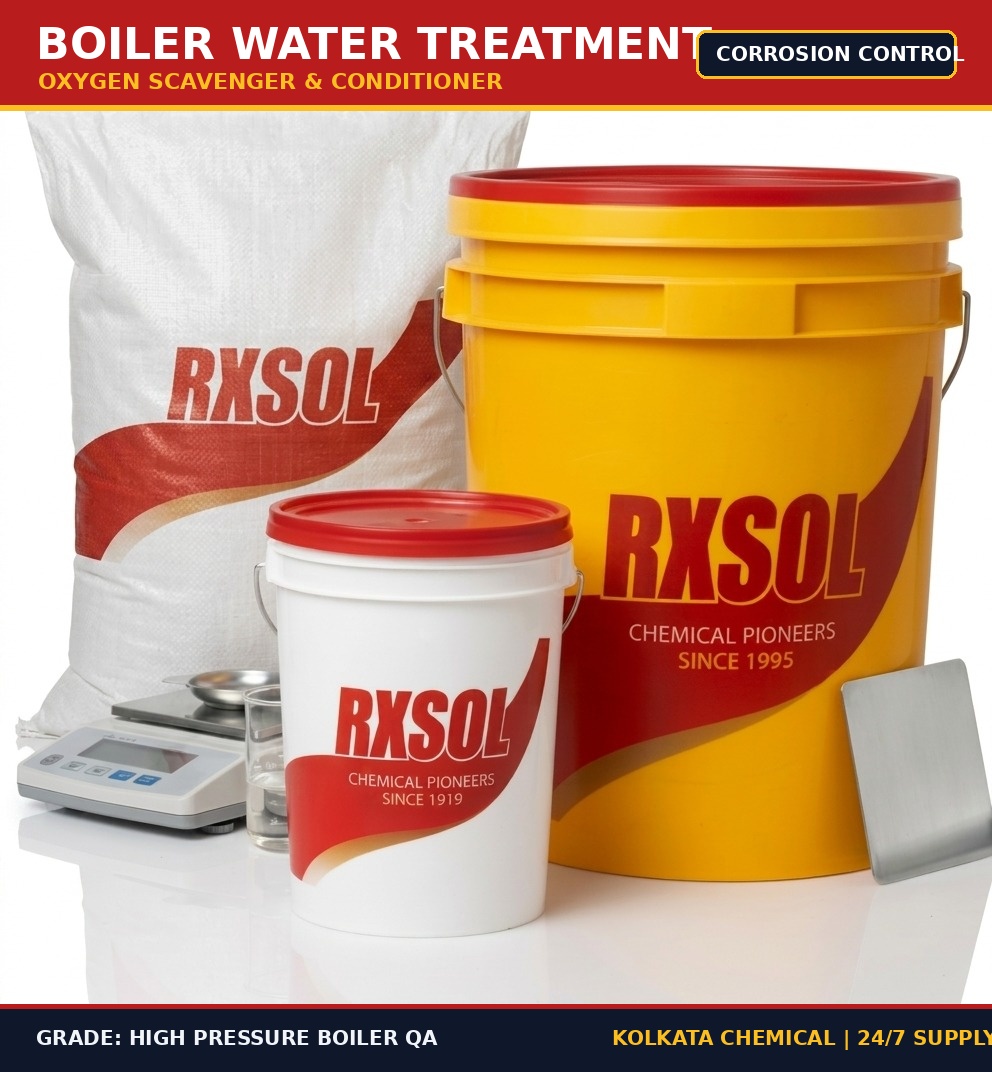
Glycol antifreeze - corrosion & scale inhibitors
Antifreeze compound for cooling water systems , It is a high quality effective blend of GLYCOL classified chemicals along with CORROSION inhibitor to protects all engineering precious metal including aluminium . Its chemically treated layer protect radiators and engines, against rust and corrosion. Its proper dose in cooling system gives full protection from corrosion.
It is biodegradable and does not have an environmental problem.
It also contains non-toxic multi-metal inhibitors to protect chillers and their associated cooling systems against corrosion and scale inorder to maximise heat transfer properties of the system. It should be diluted using ultrapure, demineralised, softened water.
An inhibited liquid coolant designed to protect against corrosion attack on base metals and also used to lower the freezing point of water
Prevents icing at the compressor inlet and is fully miscible with water in any proportion. Leaves no bonding or deposits on turbine blade surfaces. Suitable for use across an air intake temperature range from +8 °C down to –35 °C.
Solution Strength :
25 Ltrs RXSOL-16-4020-025 : 75 Ltrs Water gives freezing protection up to -140C "or" 25% solution (1 part anti-freeze to 3 parts water)
For extra cold / winter climate , increase to a 33% solution (1 part anti-freeze to 2 parts water) to give freezing protection down to -170C.
Antifreezes have been proposed with consist of water-soluble alcohols as the chief nonaqueous ingredients plus anticorrosion agents containing 0.4 to 80% benzotriazole, its ammonium salt, or tetrabortate, or their mixtures. The amount of the agent in the antifreeze is sufficient to produce a concentration of about 0.01 to 2.0% benzotriazole or its salt and 0.5 to 3.0% of the weight of the water soluble alcohols.
Another antifreeze consists of a water-soluble alcohol, particularly ethylene glycol, and an agent containing 0.2 to 77% benzotriazole, its alkali metal or ammonium salt or their mixtures, or N-alkylbenzotriazole; 2.2 to 80% of an alkali metal arsenite, arsenate or molybdate or their mixtures; and 11 to 96% of a material which maintains the pH of the aqueous solution of the anticorrosion agent at about 7.5 to 10.5. The anticorrosion agent is present in an amount sufficient to produce concentrations of 0.01 to 2.0% benzotriazole; 0.1 to 2.0% arsenite, arsenate, or molybdate; and 0.5 to 2.5% of the buffer.
Other corrosion inhibitors for ethylene glycol solutions have been proposed. For example, one contains 1 part phosphoric acid (density 1.75) and sufficient technical triethanolamine (usually about 3 parts by wt) added to 100 parts ethylene glycol to bring the pH of a 50% aqueous solution of the mixture to 7.2. The resulting composition shows less tendency to corrode metals than a corresponding composition in which the benzotriazole is replaced by 0.2 to 0.3 parts sodium mercaptobenzotriazole.
| Appearance | : Clear Syrupy Liquid |
| pH | : 7 - 8.5 |
| Freezing Point (50% Vol) | : -35 ºC to -37 ºC |
| Boiling Point | : 195 ºC - 198ºC |
| Odour | : Characteristic |
| Specific Gravity | : 1.112 - 1.115 |
Prevents icing at the compressor inlet and is fully miscible with water in any proportion. Leaves no bonding or deposits on turbine blade surfaces. Suitable for use across an air intake temperature range from +8 °C down to –35 °C.

| Product Name |
Antifreeze Liquid |
| Product Type |
RXSOL-16-4020-005 |
Company Details:
RX MARINE INTERNATIONAL
105, A wing , BSEL , TECH PARK.
VASHI ,NEW BOMBAY 400703 INDIA
Stock Point : Mumbai, Kandla, Kolkata, Chennai, Vizag, Surat, Fujairah, Muscat, Nairobi
| Phone | +91 22 65113333/ 5555 / 9999 / 27611360 / 27815540 |
| Fax | +91 22 2781 1318 :::AOH :0091 9322594669 |
| mail@rxmarine.com |

| Name | CAS# | %(V/V) | TLV-TWA(8 h) | STEL | CEILING |
| Ethylene Glycol | 107-21-1 | >55 | Not established | Not established | 100 mg/m³(aerosol) |
| Sodium Tetraborate Pentahydrate | 1330-43-4 | 5 | 1mg/m³ | Not established | Not established |
| Proprietory Blend of Corrosion Inhibitor | --- | 2 | --- | --- | --- |
Manufacturer Recommendation: Not applicable
Other Exposure Limits: Consult local, state, provincial or territory authorities for acceptable exposure limits.

Potential Health Effects:
Contact can cause slight irritation of skin, eyes and respiratory tract. Extremely dangerous in case of ingestion. For more information, refer to Section 11.

Eye Contact:
IMMEDIATELY flush eyes with running water for at least 15 minutes, keeping eyelids open. Seek medical attention.
Skin Contact:
Remove contaminated clothing - launder before reuse. Wash gently and thoroughly the contaminated skin with running water and non-abrasive soap. Seek medical attention.
Inhalation:
Evacuate the victim to a safe area as soon as possible. If the victim is not breathing, perform artificial respiration. Allow the victim to rest in a well ventilated area. Seek medical attention.
Ingestion:
DO NOT induce vomiting because of danger of aspirating liquid into lungs. Seek medical attention.
Note to Physician: Not available

Flammability: May be combustible at high temperature.
Flash Points:Closed Cup: 116ºC (Tagliabue) Open Cup: 116ºC (Cleveland)
Flammable Limits:Lower: 3.2%, Upper: 15.3%
Auto-Ignition Temperature:413ºC
Fire Hazards in Presence of Various Substances:Combustible in presence of open flames and sparks.
Explosion Hazards in Presence of Various Substances:Not a product presenting risks of explosion.
Products of Combustion:Carbon oxides (CO, CO2), smoke and irritating vapours as products of incomplete combustion.
Fire Fighting Media and Instructions:
SMALL FIRE: Use DRY chemicals, CO2, water spray or foam.
LARGE FIRE: Use water spray, fog or foam. DO NOT use water jet.

Material Release or Spill:
Small spill or leak:
Dilute with water and mop up or absorb with an inert DRY material and place in an appropriate waste disposal container.
Large spill or leak:
Absorb with an inert material and put the spilled material in an appropriate waste disposal. Dispose of in accordance with regional regulations.

Handling:
Avoid contamination with reactive substances. After handling, always wash hands thoroughly with soap and water.
Storage:
Keep container dry. Keep container tightly closed. Keep in a cool, well-ventilated place.

Engineering Controls:
For normal application, special ventilation is not necessary. If user's operations generate vapours or mist, use ventilation to keep exposure to airborne contaminants below the exposure limit. Make-up air should always be supplied to balance air removed by exhaust ventilation. Ensure that eyewash station and safety shower are close to work-station.
Personal Protection:
The selection of personal protective equipment varies, depending upon conditions of use.
Eyes:
Eye protection (i.e., safety glasses, safety goggles and/or face shield) should be determined based on conditions of use. If product is used in an application where splashing may occur, the use of safety goggles and/or a face shield should be considered.
Body:
Wear appropriate clothing to prevent skin contact. As a minimum long sleeves and trousers should be worn.
Hands:
Wear appropriate chemically protective gloves. When handling hot product ensure gloves are heat resistant and insulated.
Feet:
Wear appropriate footwear to prevent product from coming in contact with feet and skin.

| Physical State and Appearance | ;Clear liquid. |
| Colour | :Clear (Custom). |
| Odour | :Odourless. |
| Odour Threshold | :Not available |
| Boiling Point | :129 to 197°C (264 to 387°F) |
| Density | :>1 to 1.145 (Water = 1) |
| Vapour Density | :2.1 (Air=1). |
| Vapour Pressure | :0.06 mmHg @ 20°C (68ºF). |
| Volatility | :0% (w/w) |
| Viscosity | :Not available |
| Pour Point | :Not available |
| Softening Point | :Not applicable. |
| Dropping Point . | :Not applicable |
| Penetration | :Not applicable. |
| Oil/Water Dist. Coeff. | :Not available |
| Ionicity (in water) | :Not available |
| Dispersion Properties | :Not available |
| Solubility | :Soluble in water, methanol and diethyl ether. |

Corrosivity: Not available
Stability:The product is stable.
Incompatible Substances/Conditions to Avoid: Reactive with oxidizing agents, acids and alkalis.
Hazardous Polymerization: Will not occur under normal working conditions.
Decomposition Products: May release COx, smoke and irritating vapours when heated to decomposition.

Routes of Entry: Eye contact and ingestion.
Acute Lethality:
LD50: 4700 mg/kg (oral/rat). [Ethylene Glycol]
LD50: 9530 mg/kg (dermal/rabbit). [Ethylene Glycol]
Chronic or Other Toxic Effects:
Dermal Route:Slightly hazardous in case of skin contact (irritant).
Inhalation Route:Slightly hazardous in case of inhalation (lung irritant). Can cause nausea, headaches and vomiting.
Oral Route:Extremely dangerous in case of ingestion.
Eye Irritation/Inflammation:Slightly hazardous in case of eye contact (irritant).
Immunotoxicity:Not available
Skin Sensitization:Not available
Respiratory Tract Sensitization:Not available
Mutagenic:Not available

| Environmental Fate | :Not available |
| Persistance/Bioaccumulation Potential | :Not vailable |
| BOD5 and COD | :Not available |
| Products of Biodegradation | :Not available |
Additional Remarks:No additional remark.

Waste Disposal:
Preferred waste management priorities are: (1) recycle or reprocess; (2) incineration with energy recovery; (3) disposal at licensed waste disposal facility. Ensure that disposal or reprocessing is in compliance with government requirements and local disposal regulations. Consult your local or regional authorities..

DOT Classification:Not a DOT controlled material (United States).
Special Provisions for Transport:Not applicable.

Other Regulations:
This product is acceptable for use under the provisions of WHMIS-CPR. All components of this formulation are listed on the CEPA-DSL (Domestic Substances List). All components of this formulation are listed on the US EPA-TSCA Inventory. This product has been classified in accordance with the hazard criteria of the Controlled Products Regulations (CPR) and the MSDS contains all of the information required by the CPR. Please contact Product Safety for more information.
DSD/DPD (EEC):Not evaluated.
WHMIS (Canada): D-2A
ADR (Europe)(Pictograms):
NOT EVALUATED FOR EUROPEAN TRANSPORT NON ÉVALUÉ POUR LE TRANSPORT EUROPÉEN

Text of R and S phrase codes used in this safety data sheet:- R34: Causes burns; R36: Irritating to eyes; R37:Irritating to respiratory system; R41: Risk of serious damage to eyes. The information provided about the product on this Safety Data Sheet has been compiled from knowledge of the individual constituents The data given here is based on current knowledge and experience. This Safety Data Sheet describes the product in terms of safety requirements and does not signify any warranty with regard to the product's properties The data given here only applies when product used for proper application(s). The product is not sold as suitable for other applications usage in such may cause risks not mentioned in this sheet. Do not use for other application(s) without seeking advice from manufacturer.
DISCLAIMER OF LIABILITY :The information in this SDS was obtained from sources which we believe are reliable. However, the information is provided without any warranty, express or implied, regarding its correctness. The conditions or methods of handling, storage, use or disposal of the product are beyond our control and may be beyond our knowledge. For this and other reasons, we do not assume responsibility and expressly disclaim liability for loss, damage or expense arising out of or in any way connected with the handling, storage, use or disposal of the product. This MSDS was prepared and is to be used only for this product. If the product is used as a component in another product, this MSDS information may not be applicable.