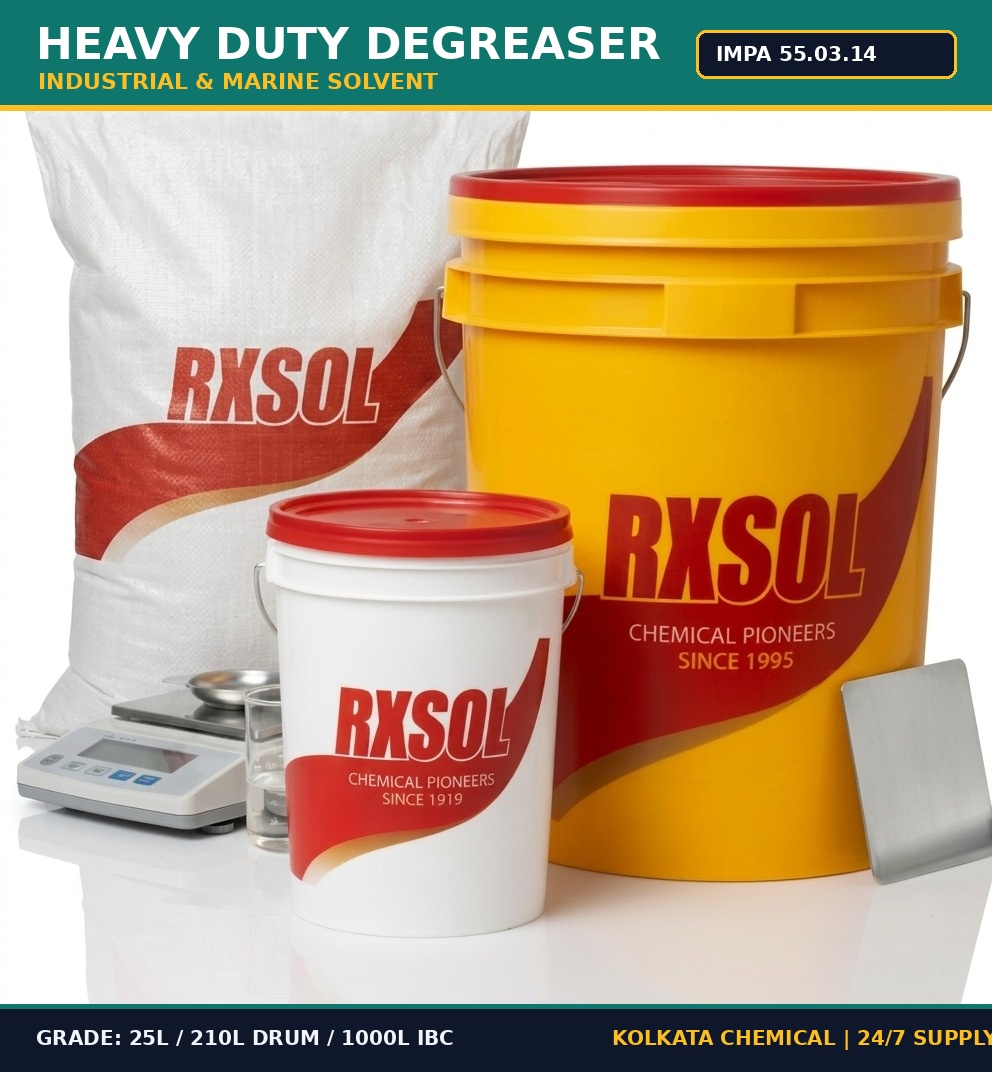
TRI CHLORO ETHYLENE

PURE Trichloroethylene (TCE) is a halocarbon with the formula C2HCl3
Category
Trichloro ethylene TCE supplier. We are keeping ready stock of TCE well maintain long lasting heavy duty good quality of air tight Drums.
Application

Uses:

Industry                                      Application
Food Industry

Extraction of oil from soya seeds, coconut and palm
Extraction of coffee from beans

Paint Paint stripper and spot remover
Medical Anaesthetic
Semiconductor Oxidation of wafers
Electroplating Cold-cleaning and vapour degreasing solvent
Steel As solvent in mfr of steel
Paper and Pulp As solvent in de-inking
Rubber As solvent in rubber mfr
 
Dose

Technical specifications


 PRODUCT NAME  : TRICHLOROETHYLENE
 CAS number       : 79-01-6
 UN number       : 1710
 Formula         : CICH=CCI2
Odour    : CHLOROFORM LIKE
Solubility in water    :  NEGLIGIBLE
Density : 1.46 at 25 oC
Boiling point    : 87 oC
 Melting point  : -73 oC
 Viscosity          :  
 Flashpoint            :  
 Explosive limits      : 7.9 - ? Vol%
 Vapour pressure       : 77 mbar at 20 oC
 Skin absorption/irritation           : YES
 TLV       Country  NL             Year  1995   : 35 ppm                 190      mg/m3
 Pollution category    1994      : C
 
Note

Packing sizes
TRICHLORO ETHYLENE TCE available in 30 Kg, 60 Kg, 280 Kg Drum
MSDS

Product Name

Tri Chloro Ethylene

Product Type

RXSOL-19-1456-210

Company Details:
RX MARINE INTERNATIONAL
105, A wing , BSEL , TECH PARK.
VASHI ,NEW BOMBAY 400703 INDIA   

Stock Point : Mumbai, Kandla, Kolkata, Chennai, Vizag, Fujairah, Muscat, Nairobi   

Phone +91 22 65113333/ 5555 / 9999 / 27611360 / 27815540
Fax +91 22 2781 1318 :::AOH :0091 9322594669
Email mail@rxmarine.com

Substance:

Formula Cl2CCHCl C2HCl3 (Hill)
Index-No. 602-027-00-9  
EC-No. 201-167-4  
Molar mass 131.39 g/mol  

Hazardous components (REGULATION (EC) No 1272/2008):

Chemical Name (Concentration) CAS-No. Registration number Classification
trichloroethylene (= 100 % )  79-01-6 01-2119490731-36-XXXX Skin irritation, Category 2, H315
Eye irritation, Category 2, H319
Germ cell mutagenicity, Category 2, H341Carcinogenicity, Category 1B, H350Specific target organ toxicity - single exposure, Category 3, H336
Chronic aquatic toxicity, Category 3, H412


For the full text of the H-Statements mentioned in this Section, see Section16 :

Hazardous components (1999/45/EC) :

Chemical Name (Concentration) CAS-No. Classification
trichloroethylene (= 100 % ) 79-01-6 Carc.Cat.2; R45
Mut.Cat.3; R68
Xi, Irritant; R36/38
R67
R52-53

For the full text of the R-phrases mentioned in this Section, see Section 16:

Mixture:
not applicable

Classification of the substance or mixture:
Classification (REGULATION (EC) No 1272/2008):
Carcinogenicity, Category 1B, H350
Germ cell mutagenicity, Category 2, H341
Specific target organ toxicity - single exposure, Category 3, Central nervous system, H336  Skin irritation, Category 2, H315
Eye irritation, Category 2, H319
Chronic aquatic toxicity, Category 3, H412

For the full text of the H-Statements mentioned in this Section, see Section16:

Classification (67/548/EEC or 1999/45/EC):

Carc.Cat.2 Carcinogenic Category 2 R45
Mut.Cat.3 Mutagenic Category 3 R68
Xi Irritant R36/38
    R67
    R52/53

For the full text of the R-phrases mentioned in this Section, see Section 16:

Label elements:
Labelling (REGULATION (EC) No 1272/2008):

Hazard pictograms:
Signal word:
Danger
 
Hazard statements:
H350 May cause cancer.
H315 Causes skin irritation.
H319 Causes serious eye irritation.
H336 May cause drowsiness or dizziness.
H341 Suspected of causing genetic defects.
H412 Harmful to aquatic life with long lasting effects.

Precautionary statements:
Prevention:
P201 Obtain special instructions before use.
P273 Avoid release to the environment.
Response
P302 + P352 IF ON SKIN: Wash with plenty of soap and water.
P305 + P351 + P338 IF IN EYES: Rinse cautiously with water for several minutes. Remove contact lenses, if present and easy to do. Continue rinsing.
P308 + P313 IF exposed or concerned: Get medical advice/ attention.
Restricted to professional users.

Reduced labelling (≤125 ml):
Hazard pictograms
Signal word
Danger

Hazard statements:
H350 May cause cancer.
H341 Suspected of causing genetic defects.
H412 Harmful to aquatic life with long lasting effects.

Precautionary statements:
P201 Obtain special instructions before use.
P308 + P313 IF exposed or concerned: Get medical advice/ attention.

Restricted to professional users.

Other hazards:
None known.
 

Description of  first aid measures: After inhalation: fresh air. Consult a physician.
After skin contact: wash off with plenty of water. Remove contaminated clothing. Consult a physician.
After eye contact: rinse out with plenty of water. Call in ophthalmologist.
After swallowing:              caution if victim vomits. Risk of aspiration! Keep airways free. Pulmonary failure possible after aspiration of vomit. Call a physician immediately. Laxative: Sodium sulfate (1 tablespoon/1/4 l water). activated charcoal (20 - 40 g in 10% slurry).
Most important symptoms and effects, both acute and delayed: irritant effects, Cough, Shortness of breath, Drowsiness, Dizziness, narcosis, agitation, spasms, inebriation, Nausea, Vomiting, Headache, drowziness
Indication of any immediate medical attention and special treatment needed: No information available.

Extinguishing media
Suitable extinguishing media
Use extinguishing measures that are appropriate to local circumstances and the surrounding environment.
Unsuitable extinguishing media
For this substance/mixture no limitations of extinguishing agents are given.

Special hazards arising from the substance or mixture
Not combustible.
Ambient fire may liberate hazardous vapours.
Fire may cause evolution of:
Hydrogen chloride gas

Advice for firefighters:
Special protective equipment for firefighters
Stay in danger area only with self-contained breathing apparatus. Prevent skin contact by keeping a safe distance or by wearing suitable protective clothing.
Further information:
Suppress (knock down) gases/vapours/mists with a water spray jet. Prevent fire extinguishing water from contaminating surface water or the ground water system.

Personal precautions, protective equipment and emergency procedures:

Personal precautions, protective equipment and emergency procedures: Advice for non-emergency personnel: Avoid substance contact. Do not breathe vapours, aerosols. Ensure adequate ventilation. Evacuate the danger area, observe emergency procedures, consult an expert.Advice for emergency responders: Protective equipment see section8.
Environmental precautions:                 Do not empty into drains.
Methods and materials for containment and cleaning up: Cover drains. Collect, bind, and pump off spills.Observe possible material restrictions (see sections 7 and 10).Take up with liquid-absorbent material (e.g. Chemizorb® ). Dispose of properly. Clean up affected area. Do not inhale vapours.
Reference to other sections: Indications about waste treatment see section 13.

Precautions for safe handling:              Advice on safe handling:
Work under hood. Do not inhale substance/mixture. Avoid generation of vapours/aerosols.
Observe label precautions.: Hygiene measures:
Immediately change contaminated clothing. Apply preventive skin protection. Wash hands and face after working with substance.
Conditions for safe storage, including any incompatibilities:
Storage conditions: Tightly closed. Keep in a well-ventilated place. Keep locked up or in an area accessible only to qualified or authorised persons.Recommended storage temperature see product label.
Specific end use(s): See exposure scenario in the Annex to this MSDS.

Control parameters:
Components with workplace control parameters Components Basis Value Threshold limits Remarks

 BASIS  Value  Threshold limits  Remarks


trichloroethylene (79-01-6):

EH40 WEL Short Term Exposure Limit (STEL): 150 ppm
820 mg/m³
 
  Skin designation:   Can be absorbed through the skin 
  Time Weighted Average (TWA): 100 ppm
550 mg/m³


Derived No Effect Level (DNEL) Worker DNEL:acute Systemic effects inhalation 164.1

Worker DNEL, acute Systemic effects inhalation 164.1 mg/m³
Worker DNEL, acute Local effects dermal 164.1 mg/m³
Worker DNEL, longterm Systemic effects inhalation 7.8 mg/kg Body weight
Worker DNEL, longterm Systemic effects inhalation 54.7 mg/m³

Recommended monitoring procedures
Methods for measurement of the workplace atmosphere have to correspond to the requirements of norms DIN EN 482 and DIN EN 689.
Predicted No Effect Concentration (PNEC):

PNEC Fresh water 0.115 mg/l
PNEC Marine water 0.0115 mg/l
PNEC Aquatic intermittent release 0.208 mg/l
PNEC Sewage treatment plant 2.6 mg/l
PNEC Fresh water sediment 2.04 mg/kg
PNEC Marine sediment 0.204 mg/kg
PNEC Soil 0.344 mg/kg
PNEC oral 13.8 mg/kg

Exposure controls:
Engineering measures:
Technical measures and appropriate working operations should be given priority over the use of personal protective equipment.
See section 7.1.

Individual protection measures:
Protective clothing needs to be selected specifically for the workplace, depending on concentrations and quantities of the hazardous substances handled. The chemical resistance of the protective equipment should be enquired at the respective supplier.

Eye/face protection:
Safety glasses

Hand protection:

full contact: Glove material:
Glove thickness:
Break through time:
Viton(R)
0.70 mm
>480mm
splash contact: Glove material:
Glove thickness:
Break through time:
Nitrile Rubber
0.40 mm
>10 mm


The protective gloves to be used must comply with the specifications of EC Directive 89/686/EEC and the related standard EN374, for example KCL 890 Vitoject® (full contact), KCL 730 Camatril® -Velours (splash contact).The breakthrough times stated above were determined by KCL in laboratory tests acc. to EN374 with samples of the recommended glove types.This recommendation applies only to the product stated in the safety data sheet, supplied by us and for the designated use. When dissolving in or mixing with other substances and under conditions deviating from those stated in EN374 please contact the supplier of CE-approved gloves

Other protective equipment:
protective clothing

Respiratory protection:
required when vapours/aerosols are generated.Empfohlener Filtertyp: Filter A (acc. to DIN 3181) for vapours of organic compounds The entrepeneur has to ensure that maintenance, cleaning and testing of respiratory protective devices are carried out according to the instructions of the producer. These measures have to be properly documented.

Environmental exposure controls:
Do not empty into drains.


 Information on basic physical and chemical properties:

Form

Liquid

Colour   

Colourless

Odour   

No odour warning

Odour Threshold

28 - 2160 ppm

pH   

No information  available

Melting point

-86 °C

Boiling point/boiling range                                        

87 °C at 1,013 hPa

Flash point

Not determinable

Evaporation rate

No information available.

Flammability (solid, gas)

No information available.

Lower explosion limit 

7.9 %(V)

Upper explosion limit

>99 %(V)(Saturation-at high volume fractions, explosion turns into a decomposition reaction)

Vapour pressure

77 hPa at 20 °C

Relative vapour density

4.53

Density

1.21 - 1.26 g/cm³   at 20 °C

Relative density

1.46 g/cm³ at 20 °C

Water solubility

1.28 g/l at 25 °C

Partition coefficient: n-octanol/water 

log Pow: 2.29 (experimental) (IUCLID) Bioaccumulation is not expected.

Auto-ignition temperature

No information available.

Decomposition temperature

> 110 °C.

Viscosity, dynamic

0.55 mPa.s at 25 °C

Explosive properties

Not classified as explosive.

Oxidizing properties 

None


Other data:
Ignition temperature
410 °C

Reactivity: See section 10
Chemical stability: Heat-sensitive
Possibility of hazardous reactions: Violent reactions possible with:
Oxygen, (as liquefied gas)
Alkaline earth metals, alkali amides, semimetallic hydrogen compounds, perchloric acid, Light metals, aluminium chloride, Strong oxidizing agents, POTASSIUM NITRATE
Risk of explosion with: Alkali metals, Aluminium, Barium, alkali hydroxides, Lithium, magnesium, Powdered metals, sodium amide,nitrogen dioxide, Boranes Strong oxidizing agents, Oxygen, with, alkali hydroxides Oxygen, with, Pressure Risk of ignition or formation of inflammable gases or vapours with:
Titanium, Beryllium, Epoxy constituents
Conditions to   avoid :                                          Strong heating (decomposition)., Distillation (Risk of explosion).
Incompatible materials: Various plastics
Hazardous decomposition products: In the event of fire: See section 5.

Information on toxicological effects :
Acute oral toxicity:
LD50 rat: 4,920 mg/kg (IUCLID)
LDLO human: 7,000 mg/kg (RTECS)

absorption:
Symptoms: Nausea, Vomiting, Risk of aspiration upon vomiting., Aspiration may cause pulmonary oedema and pneumonitis.

Acute inhalation toxicity:
LC50 rat: 43.84 mg/l; 4 h (IUCLID)

Symptoms: Possible damages:, mucosal irritations, After a latency period:, Lung oedema

Acute dermal toxicity:
LD50 rabbit: > 29,000 mg/kg (IUCLID)
absorption
Skin irritation
rabbit
Result: Severe irritations
(IUCLID)
Drying-out effect resulting in rough and chapped skin.
Causes skin irritation.
Eye irritation
rabbit
Result: Eye irritation
(IUCLID)
Causes serious eye irritation.
Sensitisation
This information is not available.
Germ cell mutagenicity
Genotoxicity in vitro
Ames test
Result: negative
(IUCLID)

Carcinogenicity:
This information is not available.

Reproductive toxicity:
This information is not available.
Teratogenicity
This information is not available.
CMR effects

Carcinogenicity:
May cause cancer.

Mutagenicity:
Suspected of causing genetic defects.
Specific target organ toxicity - single exposure

Target Organs: Central nervous system
May cause drowsiness or dizziness.
Specific target organ toxicity - repeated exposure
This information is not available.

Aspiration hazard:
This information is not available.

Further information:
After absorption:
Headache, Dizziness, Cardiac irregularities, Nausea, agitation, spasms, inebriation, narcosis
Absorption can result in damage to:
Liver, Kidney
After long-term exposure to the chemical:

Toxic effect on:
Central nervous system

Further data:
Handle in accordance with good industrial hygiene and safety practice.

Toxicity:
Toxicity to fish:
LC50 Pimephales promelas (fathead minnow): 41 mg/l; 96 h (ECOTOX Database)
Toxicity to daphnia and other aquatic invertebrates
EC50 Daphnia magna (Water flea): 18 mg/l; 48 h (IUCLID)
Toxicity to algae:
IC50 Pseudokirchneriella subcapitata (green algae): 175 mg/l; 96 h (IUCLID)
Toxicity to bacteria:
EC50 Photobacterium phosphoreum: 975 mg/l; 5 min (IUCLID)

Persistence and degradability:
Biodegradability:
19 %; 28 d
OECD Test Guideline 301D
Not readily biodegradable.
4 %; 28 d
Zahn-Wellens Test:
Not readily eliminated from water.

Bioaccumulative Potential:
Partition coefficient: n-octanol/water
log Pow: 2.29
(experimental)
(IUCLID) Bioaccumulation is not expected.

Mobility in soil:
Distribution among environmental compartments
Adsorption/Soil
log Koc: 1.97
(experimental)
Mobile in soils

Results of PBT and vPvB assessment:
Substance does not meet the criteria for PBT or vPvB according to Regulation (EC) No 1907/2006, Annex XIII.

Other adverse effects:
Henry constant
998 Pa*m³/mol
(Lit.) Distribution preferentially in air.
Additional ecological information
Discharge into the environment must be avoided.

Waste treatment methods:
Waste material must be disposed of in accordance with the Directive on waste 2008/98/EC as well as other national and local regulations. Leave chemicals in original containers. No mixing with other waste. Handle uncleaned containers like the product itself.
 

 Land transport (ADR/RID):

UN number UN 1710
Proper shipping name TRICHLOROETHYLENE
Class 6.1
Packing group III
Environmentally hazardous --
Special precautions for user Yes
Tunnel restriction code E

Inland waterway transport (ADN): Not relevant

Air transport (IATA):

UN number UN 1710
Proper shipping name TRICHLOROETHYLENE
Class 6.1
Packing group III
Environmentally hazardous --
Special precautions for user no
Tunnel restriction code E

 Sea transport (IMDG):

UN number UN 1710
Proper shipping name TRICHLOROETHYLENE
Class 6.1
Packing group III
Environmentally hazardous --
Special precautions for user Yes
Tunnel restriction code E
EmS EmS

Transport in bulk according to Annex II of MARPOL 73/78 and the IBC Code:
Not relevant

EU regulations:

Major Accident Hazard 96/82/EC
Legislation Directive 96/82/EC does not apply
Occupational restrictions Take note of Dir 94/33/EC on the protection of young people at work. Take note of Dir 92/85/EEC on the safety and health at work of pregnant workers.
Regulation (EC) No 1005/2009 on substances that deplete the ozone layer Not regulated
Regulation (EC) No 850/2004 of the European Parliament and of the Council of 29 April 2004 on persistent organic pollutants and amending Directive 79/117/EEC Not regulated
Regulation (EC) No 689/2008 concerning the export and import of dangerous chemicals Not regulated
Substances of very high concern (SVHC) This product does contain substances of very high concern above the respective regulatory limit (> 0.1 % (w/w), Regulation (EC) No 1907/2006 (REACH), Article 57).
Contains:trichloroethylene

Chemical Safety Assessment:
For this product a chemical safety assessment was not carried out.

The information provided about the product on this Safety Data Sheet has been compiled from knowledge of the individual constituents The data given here is based on current knowledge and experience. This Safety Data Sheet describes the product in terms of safety requirements and does not signify any warranty with regard to the product's properties The data given here only applies when product used for proper application(s). The product is not sold as suitable for other applications usage in such may cause risks not mentioned in this sheet. Do not use for other application(s) without seeking advice from manufacturer.

DISCLAIMER OF LIABILITY :The information in this SDS was obtained from sources which we believe are reliable. However, the information is provided without any warranty, express or implied, regarding its correctness. The conditions or methods of handling, storage, use or disposal of the product are beyond our control and may be beyond our knowledge. For this and other reasons, we do not assume responsibility and expressly disclaim liability for loss, damage or expense arising out of or in any way connected with the handling, storage, use or disposal of the product. This MSDS was prepared and is to be used only for this product. If the product is used as a component in another product, this MSDS information may not be applicable.

Need a quote for this product?

Tell us the grade, packing and quantity you need — we ship across India and to major ports.

Request a quote office@kolkatachemical.com