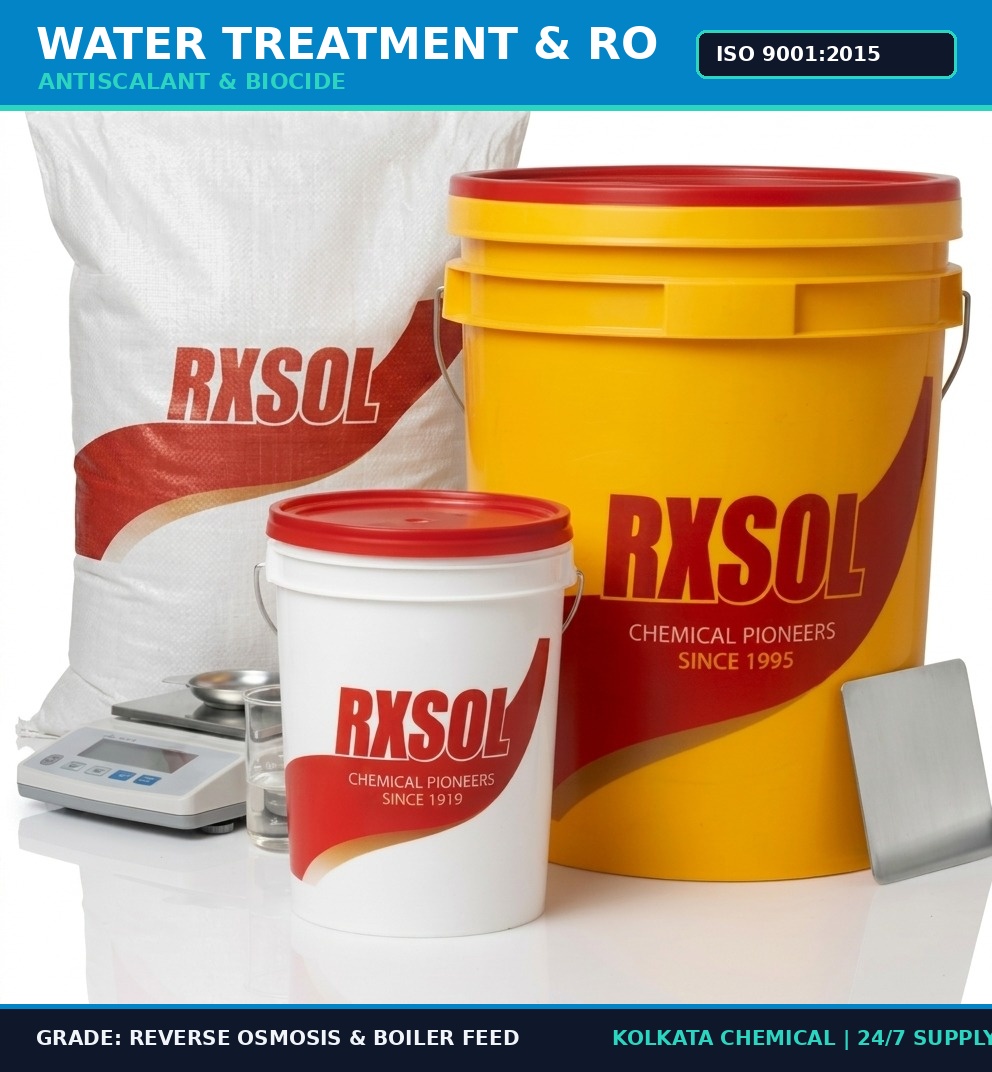
Poly Aluminum Chloride

Supreme grade Polyaluminium Chloride Powder is widely used in water treatment plants for purification of water.
Application

Poly Aluminum Chloride is a trusted coagulant widely used in water treatment. It helps remove suspended solids, color, and impurities, making water cleaner and clearer. Ideal for municipal, industrial, and paper-making applications. Delivers reliable performance with ease of use.

Its key features include

  • Effective in clarifying water
  • Helps improve filter performance
  • Reduces sludge volume
  • Suitable for multiple industries
  • Easy to handle and dose
MSDS

Porduct Name               Poly Aluminum Chloride
Part Number   RXSOL-40-4082-025

Company Details:

RX MARINE INTERNATIONAL
105, A wing , BSEL , TECH PARK.
VASHI ,NEW BOMBAY 400703 INDIA

Branch : Kandla, Mumbai , Chennai, Vizag, Kolkata, UAE , OMAN , CANADA and KENYA  

Phone +91 22 20871200 - 1400
Fax +91 22 27612100 :::AOH :0091 9821214367
Email mail@rxmarine.com
Website www.rxmraine.com

Product name       Cas No                        EC No              Weight%                         Formula                   
POLYALUMINIUM CHLORIDE  1327-41-9 215-477-2 25-40% [Al2(OH)nCl6-n-xH2O]m
Signal Word  Danger
Hazard Statements H318 Causes serious eye damage
Precautionary statements   P280 Wear protective gloves/ protective clothing/ eye protection/ face protection. P305+P351+P338 IF IN EYES: Rinse cautiously with water for several minutes. Remove contact lenses, if present and easy to do. Continue rinsing. P310 Immediately call a POISON CENTER/ doctor.
Classification of  the          substance or  mixture No data available
Supplemental Hazard      Statements No data available
Other hazards  This substance/mixture contains no components considered to be either persistent, bioaccumulative and toxic (PBT), or very persistent and very bioaccumulative (vPvB) at levels of 0.1% or higher.

General advice First aid personnel should wear appropriate protective equipment during any rescue. If it is suspected that volatile contaminants are still present around the affected person, first aid personnel should wear an appropriate respirator or self-contained breathing apparatus. Wash contaminated clothing thoroughly with water before removing it from the affected person, or wear gloves. It may be dangerous for first aid personnel to carry out mouth-to-mouth resuscitation
If inhaled No data available
Eye Contact  Rinse immediately with plenty of water. Remove any contact lenses and open eyelids wide apart. Continue to rinse for at least 10 minutes.
Swallowed No data available
Skin Contact   Rinse with water.
Inhalation Remove affected person from source of contamination. Move affected person to fresh air and keep warm and at rest in a position comfortable for breathing. Maintain an open airway. Loosen tight clothing such as collar, tie or belt. When breathing is difficult, properly trained personnel may assist affected person by administering oxygen. Place unconscious person on their side in the recovery position and ensure breathing can take place
Ingestion Rinse mouth thoroughly with water. Remove any dentures. Give a few small glasses of water or milk to drink. Stop if the affected person feels sick as vomiting may be dangerous. Do not induce vomiting unless under the direction of medical personnel. If vomiting occurs, the head should be kept low so that vomit does not enter the lungs. Never give anything by mouth to an unconscious person. Move affected person to fresh air and keep warm and at rest in a position comfortable for breathing. Place unconscious person on their side in the recovery position and ensure breathing can take place. Maintain an open airway. Loosen tight clothing such as collar, tie or belt.
Most important   symptoms and effects,        both acute and delaye  See Section 11 for additional information on health hazards. The severity of the symptoms described will vary dependent on the concentration and the length of exposure.
Indication of any immediate medical    attention and special  treatment needed  Treat symptomatically.

Flammability                                                  No data available
Suitable extinguishing media  The product is not flammable. Extinguish with alcohol-resistant foam, carbon dioxide, dry powder or water fog. Use fire-extinguishing media suitable for the surrounding fire.
Unsuitable extinguishing media Do not use water jet as an extinguisher, as this will spread the fire. 
Special hazards arising from the substance or mixture  Containers can burst violently or explode when heated, due to excessive pressure build-up
Further information Suppress (knock down) gases/vapors/mists with a water spray jet. Prevent fire extinguishing water from contaminating surface water or the ground water system. 
Hazardous combustion
products
Thermal decomposition or combustion products may include the following substances: Harmful gases or vapours.
Advice for firefighters Avoid breathing fire gases or vapours. Evacuate area. Cool containers exposed to heat with water spray and remove them from the fire area if it can be done without risk. Cool containers exposed to flames with water until well after the fire is out. If a leak or spill has not ignited, use water spray to disperse vapours and protect men stopping the leak. Control run-off water by containing and keeping it out of sewers and watercourses. If risk of water pollution occurs, notify appropriate authorities.
Protective Equipment Wear positive-pressure self-contained breathing apparatus (SCBA) and appropriate protective clothing. Firefighter's clothing conforming to European standard EN469 (including helmets, protective boots and gloves) will provide a basic level of protection for chemical incidents
Specific Hazards Arising from the Chemical No data available

Personal precautions, protective  equipment and    emergency    procedures No action shall be taken without appropriate training or involving any personal risk. Keep unnecessary and unprotected personnel away from the spillage. Wear protective clothing as described in Section 8 of this safety data sheet. Follow precautions for safe handling described in this safety data sheet. Wash thoroughly after dealing with a spillage. Ensure procedures and training for emergency decontamination and disposal are in place. Do not touch or walk into spilled material.
Spillage No data available
Personal Protection No data available
Enviromental Precaution Large Spillages: Inform the relevant authorities if environmental pollution occurs (sewers, waterways, soil or air).
Methods and    materials for
containment and  cleaning
Wear protective clothing as described in Section 8 of this safety data sheet. Clear up spills immediately and dispose of waste safely. Approach the spillage from upwind. Small Spillages: If the product is soluble in water, dilute the spillage with water and mop it up. Alternatively, or if it is not water-soluble, absorb the spillage with an inert, dry material and place it in a suitable waste disposal container. Large Spillages: If leakage cannot be stopped, evacuate area. Flush spilled material into an effluent treatment plant, or proceed as follows. Contain and absorb spillage with sand, earth or other non-combustible material. Place waste in labelled, sealed containers. Clean contaminated objects and areas thoroughly, observing environmental regulations. The contaminated absorbent may pose the same hazard as the spilled material. Flush contaminated area with plenty of water. Wash thoroughly after dealing with a spillage. Dispose of waste to licensed waste disposal site in accordance with the requirements of the local Waste Disposal Authority.
Reference to    other sections    For personal protection, see Section 8. See Section 11 for additional information on health hazards. See Section 12 for additional information on ecological hazards. For waste disposal, see Section 13.

Advice on protection    against fire and    explosion No data available
Incompatible materials  No data available
Hygiene measures Wash promptly if skin becomes contaminated. Take off contaminated clothing. Wash contaminated clothing before reuse. Do not eat, drink or smoke when using this product. Wash at the end of each work shift and before eating, smoking and using the toilet. Change work clothing daily before leaving workplace.
Advice on safe      handling   Read and follow manufacturer's recommendations. Wear protective clothing as described in Section 8 of this safety data sheet. Keep away from food, drink and animal feeding stuffs. Handle all packages and containers carefully to minimise spills. Keep container tightly sealed when not in use. Avoid the formation of mists. Do not handle until all safety precautions have been read and understood. Do not handle broken packages without protective equipment. Do not reuse empty containers
Conditions for safe storage including any     incompatibilities     

No data available

Storage conditions Store in accordance with local regulations. Keep only in the original container. Keep container tightly closed, in a cool, well ventilated place. Keep containers upright. Protect containers from damage. Bund storage facilities to prevent soil and water pollution in the event of spillage. The storage area floor should be leak-tight, jointless and not absorbent.
Storage class Chemical storage.
Specific end use(s) The identified uses for this product are detailed in Section 1.2.
Advice on general occupational  hygiene No data available

Exposure controls  Personal protective equipment 
Engineering Control Provide adequate ventilation. Personal, workplace environment or biological monitoring may be required to determine the effectiveness of the ventilation or other control measures and/or the necessity to use respiratory protective equipment. Use process enclosures, local exhaust ventilation or other engineering controls as the primary means to minimise worker exposure. Personal protective equipment should only be used if worker exposure cannot be controlled adequately by the engineering control measures. Ensure control measures are regularly inspected and maintained. Ensure operatives are trained to minimise exposure.
Eye/face protection Eyewear complying with an approved standard should be worn if a risk assessment indicates eye contact is possible. Personal protective equipment for eye and face protection should comply with European Standard EN166. Wear tight-fitting, chemical splash goggles or face shield. If inhalation hazards exist, a full-face respirator may be required instead
Body Protection No data available
Skin protection Chemical-resistant, impervious gloves complying with an approved standard should be worn if a risk assessment indicates skin contact is possible. The most suitable glove should be chosen in consultation with the glove supplier/manufacturer, who can provide information about the breakthrough time of the glove material. To protect hands from chemicals, gloves should comply with European Standard EN374. Considering the data specified by the glove manufacturer, check during use that the gloves are retaining their protective properties and change them as soon as any deterioration is detected. Frequent changes are recommended.Appropriate footwear and additional protective clothing complying with an approved standard should be worn if a risk assessment indicates skin contamination is possible.
Respiratory protection
Respiratory protection complying with an approved standard should be worn if a risk assessment indicates inhalation of contaminants is possible. Ensure all respiratory protective equipment is suitable for its intended use and is ‘CE’-marked. Check that the respirator fits tightly and the filter is changed regularly. Gas and combination filter cartridges should comply with European Standard EN14387. Full face mask respirators with replaceable filter cartridges should comply with European Standard EN136. Half mask and quarter mask respirators with replaceable filter cartridges should comply with European Standard EN140.
Other Protection  Measure No data available

Physical state Liquid.
Colour Yellow.
Odour Mild. Characteristic.
Odor Threshold No data available
pH 3.5- 4.5(@20 C, %5 solution)
Melting Point No data available 
Boiling Point No data available 
Flash Point No data available 
Evaporation Rate No data available
Flammability (solid, gas) No data available
Explosive limits No data Available
Upper/lower flammability or explosive  limits No data Available
Autoignition temperature No data Available
Decomposition temperature  No data available 
Vapour pressure No data Available                                               
Viscosity 10-50 mPa.s (dynamic, @25ºC)
Density 1,37± 0,02 kg/m³
Relative Density No data available 
Specific Gravity No data available 
Partition coefficient No data Available
Explosive properties No data available 
Solubility No data available 
Ignition temperature No data available
Particle characteristics No data available 

Reactivity                        No data available
Chemical stability Stable at normal ambient temperatures and when used as recommended. Stable under the prescribed storage conditions.
Possibilityof hazardous      reactions No data available
Conditions to    avoid No data available                                                                                
Incompatible materials
No data available
Hazardous decomposition      products In the event of fire: see section 5

Acute toxicity  No data available
Skin corrosion/irritation Prolonged contact may cause dryness of the skin.
Serious eye      damage/irritation Causes serious eye damage. Symptoms following overexposure may include the following: Pain. Profuse watering of the eyes. Redness.
Respiratory or skin    sensitization  No data available
Carcinogenicity No data available
Germ cell        mutagenicity  No data available
Reproductive toxicity  No data available
Specific target    organ toxicity -      single  exposure  
No data available
Additional Information The substance/mixture does not contain components considered to have endocrine disrupting properties according to REACH Article 57(f) or Commission Delegated regulation (EU) 2017/2100 or Commission Regulation (EU) 2018/605 at levels of 0.1% or higher. Vomiting, Diarrhea, Dehydration and congestion may occur in internal organs. Hypertonic salt solutions can produce inflammatory reactions in the gastrointestinal tract., Nausea To the best of our knowledge, the chemical, physical, and toxicological properties have not been thoroughly investigated. 

Persistence and degradability The product contains inorganic substances which are not biodegradable
Toxicity to fish  No data available
Toxicity to daphnia and other  aquatic invertebrates No data available
Toxicity No data available
Toxicity to bacteria   No data available
Toxicity to algae No data available 
Products Biodegradation No data available
Mobility in soil The product is water-soluble and may spread in water systems
Results of PBT and vPvB        assessment This substance/mixture contains no components considered to be either persistent, bioaccumulative and toxic (PBT), or very persistent and very bioaccumulative (vPvB) at levels of 0.1% or higher.
Endocrine disrupting          properties  The substance/mixture does not contain components considered to have endocrine disrupting properties according to REACH Article 57(f) or Commission Delegated regulation (EU) 2017/2100 or Commission Regulation (EU) 2018/605 at levels of 0.1% or higher
Other adverse effects No data available

General information The generation of waste should be minimised or avoided wherever possible. Reuse or recycle products wherever possible. This material and its container must be disposed of in a safe way. Disposal of this product, process solutions, residues and by-products should at all times comply with the requirements of environmental protection and waste disposal legislation and any local authority requirements. When handling waste, the safety precautions applying to handling of the product should be considered. Care should be taken when handling emptied containers that have not been thoroughly cleaned or rinsed out. Empty containers or liners may retain some product residues and hence be potentially hazardous. s 
Disposal method Dispose of surplus products and those that cannot be recycled via a licensed waste disposal contractor. Waste, residues, empty containers, discarded work clothes and contaminated cleaning materials should be collected in designated containers, labelled with their contents. Incineration or landfill should only be considered when recycling is not feasible
Waste class Waste is classified as hazardous waste.

UN number

ADR/RID:2581                           IMDG:2581                                  IATA:2581

UN proper shipping  name  ADR/RID:ALUMINIUM CHLORIDE SOLUTION   IMDG:ALUMINIUM CHLORIDE SOLUTION        IATA:ALUMINIUM CHLORIDE SOLUTION
Transport hazard class(es)               ADR/RID:8                            IMDG:8                                   IATA:8
Packaging group ADR/RID:lll                             IMDG:lll                                    IATA:lll
Environmental hazards ADR/RID:No                           IMDG Marine pollutant: No      IATA: No
Special precautions for user    Tunnel restriction code (E)
Further information No data available

Safety, health and environmental        regulations/legislation specific for the substance or            mixture Health and Safety at Work etc. Act 1974 (as amended). The Chemicals (Hazard Information and Packaging for Supply) Regulations 2009 (SI 2009 No. 716). The Carriage of Dangerous Goods and Use of Transportable Pressure Equipment Regulations 2009 (SI 2009 No. 1348) (as amended) ["CDG 2009"]. EH40/2005 Workplace exposure limits
Other regulations Regulation (EC) No 1907/2006 of the European Parliament and of the Council of 18 December 2006 concerning the Registration, Evaluation, Authorisation and Restriction of Chemicals (REACH) (as amended). Commission Regulation (EU) No 453/2010 of 20 May 2010.
Chemical Safety Assessment A Chemical Safety Assessment has been carried out for this substance.

Other Information

The information above is believed to be accurate and represents the  best information   currently    available  to us.  However,   we   make no warranty of merchantability or any other warranty, express or implied, with respect to such information, and  weassume  no liability resulting from its use. Users should make  their  own  investigations  to determine the suitability of the information for their particular purposes. In no event shall be liable for any claims, losses, or damages of any third party or for lost profits or any special, indirect, incidental, consequential or exemplary damages, howsoever arising, even if Rx Marine International  has been advised of the possibility of such damages.

DISCLAIMER OF LIABILITY :The information in this SDS was obtained from sources which we believe are reliable. However, the information is provided without any warranty, express or implied, regarding its correctness. The conditions or methods of handling, storage, use or disposal of the product are beyond our control and may be beyond our knowledge. For this and other reasons, we do not assume responsibility and expressly disclaim liability for loss, damage or expense arising out of or in any way connected with the handling, storage, use or disposal of the product. This MSDS was prepared and is to be used only for this product. If the product is used as a component in another product, this MSDS information may not be applicable.

Need a quote for this product?

Tell us the grade, packing and quantity you need — we ship across India and to major ports.

Request a quote office@kolkatachemical.com