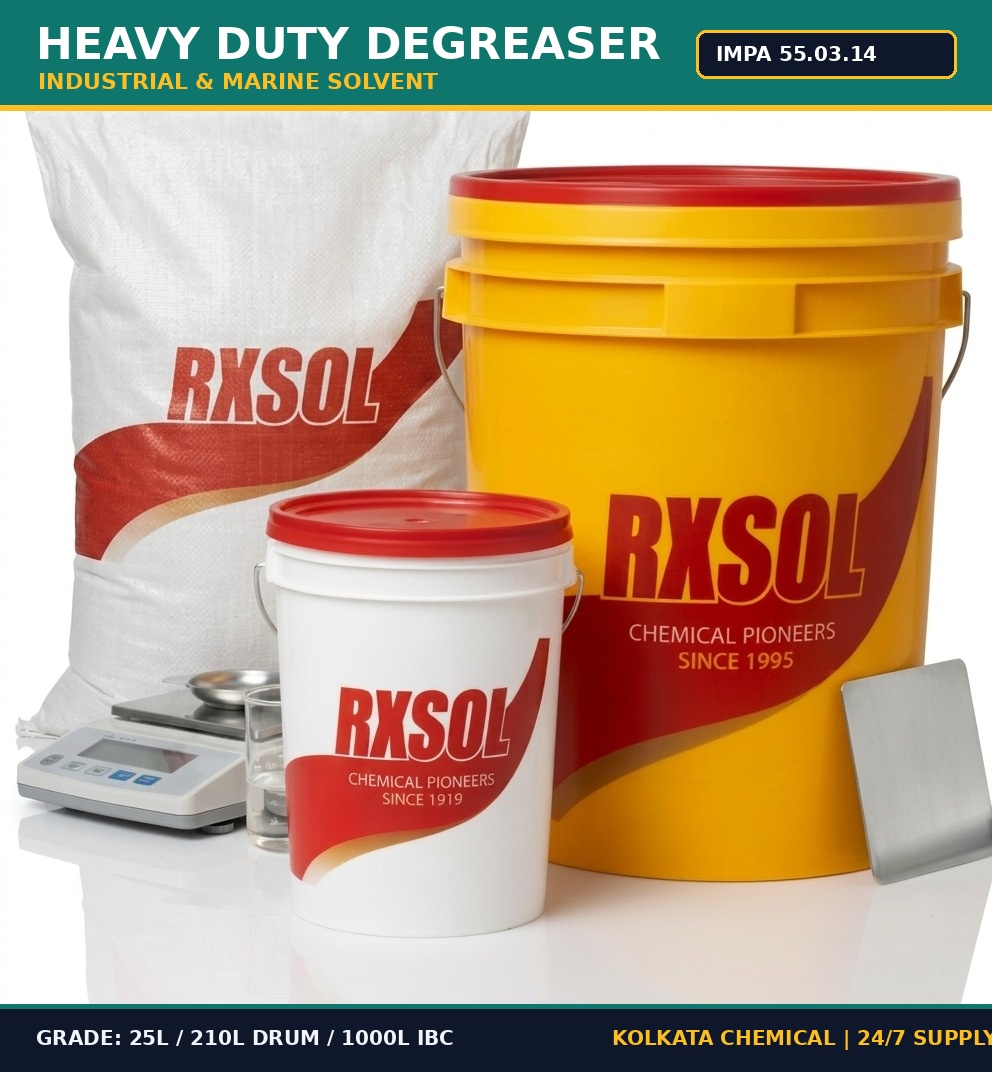
Methylene Di Chloride

It has excellent solvency power to most organic chemicals and materials. Also deals in fully tested and specified all types of CHLORINATED SOLVENT like Methylene Chloride, Perchloro Ethylene and Trichloroethylene, CPW.
Category

Methylene Chloride National and International supplier in INDIA and UAE.  We deals in fully tested and specified  all types of CHLORINATED SOLVENT like Methylene Chloride, Perchloro Ethylene and Trichloroethylene, CPW.

Methylene Chloride is a colourless, neutral liquid heavier than water and It is completely miscible with almost all organic solvents but only sparingly with water. It has excellent solvency power to most organic chemicals and materials.

Application

We have fully automatic repacking system to achieve our customer demand of methylene chloride in small packing as well. We are keeping stock in 25 Kg, 35 Kg, 60 Kg , 250 Kg. 

Methylene Chloride other name is DCM or Dichloromethane Methylene chloride, also called dichloromethane, is a volatile, colorless liquid with a chloroform-like odor. Methylene chloride is used in various industrial processes, in many different industries including It is widely used as a paint stripper paint remover manufacturing, and metal cleaning and degreasing as degreaser, pharmaceutical manufacturing, In the food industry, it has been used to decaffeinate coffee and tea as well as to prepare extracts of hops and other flavorings. Its volatility has led to its use as an aerosol spray propellant and as a blowing agent for polyurethane foams.

DCM's volatility and ability to dissolve a wide range of organic compounds makes it a useful solvent for many chemical processes.

Dose

Methylene Chloride Dose varies as per there application and requiredment. Methylene Chloride chemically also known as Bichloride Methylene, Methylene Dichloride, Methylene Dichloromethane, Methylene Bichloride, Methylene Chloride, Methylene Dichloride, Solaesthin.

Methylene Chloride is used as solvent for the synthesis of chemicals and pharmaceuticals, production of polycarbonates and cellulose triacetate (for films and fibres), Metal Degreasing (surface treatment) and paint removal, as extraction solvent in the food industry (removal of caffeine from unroasted coffee beans and tea) and as laboratory solvent.

Technical specifications
METHYLENE CHLORIDE
Test Unit Test Method Results

Appearance

  Visual
(01)
Colour Hazen
  ASTM D-2108
<5
Moisture
ppm wt ASTM D-3401
40
Acidity as HC1
ppm wt ASTM D-2989
<1
Residue on evaporation
ppm wt ASTM D-2109
<10
Free chlorine
  ASTM D-4755
Negative
Methylene chloride
wt% SGS SPI 016
99.99
Density at 15°C
g/ml ASTM D-4052
1.3349
 
Note
We are the supplier of MDC Methylene Chloride in  Paint Industry, Adhesive Manufacturing, Rubber Industry, Industrial Applications...
Methylene Chloride  widespread applications in many industrial fields due to its unique properties: 
  
• very high solvency power 
• low boiling , easily removable and vapourized
• low flammable (classified as non-flammable liquid) 
• easy and cost efficient recycling 
• biologically degradable in sewage purification plants 
• no enrichment in the environment and no ozone depletion potential (ODP) 
Remarks / Precaution

Packing sizes
270 kgs.
MSDS

Product Name RXSOL-19-1642-270
Product Type Methylene Chloride

 Company Details:

RX MARINE INTERNATIONAL
105, A wing , BSEL , TECH PARK.
VASHI ,NEW BOMBAY 400703 INDIA

Stock Point : Mumbai, Kandla, Kolkata, Chennai, Vizag, Fujairah, Muscat, Nairobi

Phone +91 22 65113333 / 5555 / 9999
Fax +91 22 2781 1318 :::AOH :0091 9821214367
Email mail@rxmarine.com

Composition:

Name CAS  Purity
Methylene chloride 75-09-2 99

Toxicological Data on Ingredients: Methylene chloride: ORAL (LD50): Acute: 1600 mg/kg [Rat].

Potential Acute Health Effects:

Very hazardous in case of eye contact (irritant), of ingestion, of inhalation. Hazardous in case of skin contact (irritant, permeator). Inflammation of the eye is characterized by redness, watering, and itching.

Potential Chronic Health Effects:

CARCINOGENIC EFFECTS: Classified + (Proven.) by OSHA. Classified 2B (Possible for human.) by IARC. MUTAGENIC EFFECTS: Not available. TERATOGENIC EFFECTS: Not available. DEVELOPMENTAL TOXICITY: Not available. The substance is toxic to lungs, the nervous system, liver, mucous membranes, central nervous system (CNS). Repeated or prolonged exposure to the substance can produce target organs damage. 

Eye Contact:

Check for and remove any contact lenses. In case of contact, immediately flush eyes with plenty of water for at least 15 minutes. Cold water may be used. Get medical attention immediately.p. 2

Skin Contact:

In case of contact, immediately flush skin with plenty of water. Cover the irritated skin with an emollient.Remove contaminated clothing and shoes. Cold water may be used.Wash clothing before reuse. Thoroughly clean shoes before reuse. Get medical attention. Serious Skin Contact: Wash with a disinfectant soap and cover the contaminated skin with an anti-bacterial cream. Seek immediate medical attention.

Inhalation:

If inhaled, remove to fresh air. If not breathing, give artificial respiration. If breathing is difficult, give oxygen. Get medical attention if symptoms appear.

Serious Inhalation:

Evacuate the victim to a safe area as soon as possible. Loosen tight clothing such as a collar, tie, belt or waistband. If breathing is difficult, administer oxygen. If the victim is not breathing, perform mouth-to-mouth resuscitation. Seek medical attention.

Ingestion:

Do NOT induce vomiting unless directed to do so by medical personnel. Never give anything by mouth to an unconscious person. If large quantities of this material are swallowed, call a physician immediately. Loosen tight clothing such as a collar, tie, belt or waistband.

Serious Ingestion: Not available.

Flammability of the Product: May be combustible at high temperature.

Auto-Ignition Temperature: 556°C (1032.8°F)

Flash Points: Not available.

Flammable Limits: LOWER: 12% UPPER: 19%

Products of Combustion: These products are carbon oxides (CO, CO2), halogenated compounds.

Fire Hazards in Presence of Various Substances: Not available.

Explosion Hazards in Presence of Various Substances: Risks of explosion of the product in presence of mechanical impact: Not available. Risks of explosion of the product in presence of static discharge: Not available.

Fire Fighting Media and Instructions: SMALL FIRE: Use DRY chemical powder. LARGE FIRE: Use water spray, fog or foam. Do not use water jet.

Special Remarks on Fire Hazards: Not available.

Special Remarks on Explosion Hazards: Not available. 

Small Spill: Dilute with water and mop up, or absorb with an inert dry material and place in an appropriate waste disposal
container.

Large Spill: Absorb with an inert material and put the spilled material in an appropriate waste disposal. Be careful that the
product is not present at a concentration level above TLV. Check TLV on the MSDS and with local authorities. 

 Precautions:

Keep locked up.. Keep away from heat. Keep away from sources of ignition. Empty containers pose a fire risk,evaporate the residue under a fume hood. Ground all equipment containing material. Do not ingest. Do not breathe gas/fumes/ vapor/spray. In case of insufficient ventilation, wear suitable respiratory equipment. If ingested, seek medical advice immediately and show the container or the label. Avoid contact with skin and eyes.

Storage:

Keep container tightly closed. Keep container in a cool, well-ventilated area.


Engineering Controls: 

Provide exhaust ventilation or other engineering controls to keep the airborne concentrations of vapors below their respective threshold limit value. Ensure that eyewash stations and safety showers are proximal to the workstation location.

Personal Protection: 

Splash goggles. Lab coat. Vapor respirator. Be sure to use an approved/certified respirator or equivalent. Gloves.

Personal Protection in Case of a Large Spill: 

Splash goggles. Full suit. Vapor respirator. Boots. Gloves. A self contained breathing apparatus should be used to avoid inhalation of the product. Suggested protective clothing might not be sufficient;consult a specialist BEFORE handling this product.

Exposure Limits:

TWA: 50 from ACGIH (TLV) [United States] TWA: 174 from ACGIH (TLV) [United States] Consult local authorities for acceptable exposure limits. 


Physical state and appearance: . Liquid
Odor: . Not available
Taste: . Not available
Molecular Weight: 84.93g/mole
Color: Not available
pH (1% soln/water): . Not available
Boiling Point: 39.75°C (103.5°F)
Melting Point: - 96.7°C (-142.1°F)
Critical Temperature: Not available.
Specific Gravity: 1.3266 (Water = 1)
Vapor Pressure: 46.5 kPa (@ 20°C)
Vapor Density: 2.93 (Air = 1)
Volatility: Not available.
Odor Threshold: 214 ppm
Water/Oil Dist. Coeff.: The product is equally soluble in oil and water; log(oil/water) = 0.1
Ionicity (in Water): . Not available
Dispersion Properties: See solubility in water, methanol, diethyl ether, n-octanol, acetone.
Solubility: Easily soluble in methanol, diethyl ether, n-octanol, acetone. Partially soluble in cold water.


Stability: . The product is stable
Instability Temperature: . Not available
Conditions of Instability: . Not available
Incompatibility with various substances: . Not available
Corrosivity: Non-corrosive in presence of glass
Special Remarks on Reactivity: . Not available
Special Remarks on Corrosivity: . Not available
Polymerization: . Will not occur

Routes of Entry: Absorbed through skin. Dermal contact. Eye contact. Inhalation. Ingestion.

Toxicity to Animals: WARNING: THE LC50 VALUES HEREUNDER ARE ESTIMATED ON THE BASIS OF A 4-HOUR EXPOSURE. Acute oral toxicity (LD50): 1600 mg/kg [Rat]. Acute toxicity of the vapor (LC50): 52000 1 hours [Rat].

Chronic Effects on Humans: CARCINOGENIC EFFECTS: Classified + (Proven.) by OSHA. Classified 2B (Possible for human.) by IARC. Causes damage to the following organs: lungs, the nervous system, liver, mucous membranes, central nervous system (CNS).

Other Toxic Effects on Humans: Very hazardous in case of ingestion, of inhalation. Hazardous in case of skin contact (irritant, permeator).

Special Remarks on Toxicity to Animals: Not available.

Special Remarks on Chronic Effects on Humans: Human: passes through the placenta, excreted in maternal milk.

Special Remarks on other Toxic Effects on Humans: Not available. 

Ecotoxicity: Not available.

BOD5 and COD: Not available.

Products of Biodegradation: Possibly hazardous short term degradation products are not likely. However, long term degradation products may arise.

Toxicity of the Products of Biodegradation: The products of degradation are more toxic.

Special Remarks on the Products of Biodegradation: Not available. 

 Waste Disposal:

DOT Classification: CLASS 6.1: Poisonous material.

Identification: : Dichloromethane UNNA: 1593 PG: III

Special Provisions for Transport: Not available.

Federal and State Regulations:

California prop. 65: This product contains the following ingredients for which the State of California has found to cause cancer, birth defects or other reproductive harm, which would require a warning under the statute: Methylene chloride California prop. 65: This product contains the following ingredients for which the State of California has found to cause cancer which would require a warning under the statute: Methylene chloride Pennsylvania RTK: Methylene chloride Massachusetts RTK: Methylene chloride TSCA 8(b) inventory: Methylene chloride SARA 313 toxic chemical notification and release reporting: Methylene chloride CERCLA: Hazardous substances.: Methylene chloride

Other Regulations:

OSHA: Hazardous by definition of Hazard Communication Standard (29 CFR 1910.1200).

Other Classifications:

WHMIS (Canada): CLASS D-1B: Material causing immediate and serious toxic effects (TOXIC). CLASS D-2A: Material causing other toxic effects (VERY TOXIC).

DSCL (EEC):

R22- Harmful if swallowed. R38- Irritating to skin. R41- Risk of serious damage to eyes. R45- May cause
cancer.

HMIS (U.S.A.):
Health Hazard: 2
Fire Hazard: 1
Reactivity: 0
Personal Protection: h

National Fire Protection Association (U.S.A.):
Health: 2
Flammability: 1
Reactivity: 0
Specific hazard:

Protective Equipment: Gloves. Lab coat. Vapor respirator. Be sure to use an approved/certified respirator or equivalent.Wear appropriate respirator when ventilation is inadequate. Splash goggles. 

 References: Not available.

Other Special Considerations: Not available.

Created: 10/10/2005 10:43 AM

Last Updated: 05/21/2013 12:00 PM

The information above is believed to be accurate and represents the best information currently available to us. However, we make no warranty of merchantability or any other warranty, express or implied, with respect to such information, and we assume no liability resulting from its use. Users should make their own investigations to determine the suitability of the information for their particular purposes. In no event shall ScienceLab.com be liable for any claims, losses, or damages of any third party or for lost profits or any special, indirect, incidental, consequential or exemplary damages, howsoever arising, even if ScienceLab.com has been advised of the possibility of such damages.

DISCLAIMER OF LIABILITY :The information in this SDS was obtained from sources which we believe are reliable. However, the information is provided without any warranty, express or implied, regarding its correctness. The conditions or methods of handling, storage, use or disposal of the product are beyond our control and may be beyond our knowledge. For this and other reasons, we do not assume responsibility and expressly disclaim liability for loss, damage or expense arising out of or in any way connected with the handling, storage, use or disposal of the product. This MSDS was prepared and is to be used only for this product. If the product is used as a component in another product, this MSDS information may not be applicable.

Need a quote for this product?

Tell us the grade, packing and quantity you need — we ship across India and to major ports.

Request a quote office@kolkatachemical.com