DYE WASH ORG DICHLOR TANK WASH
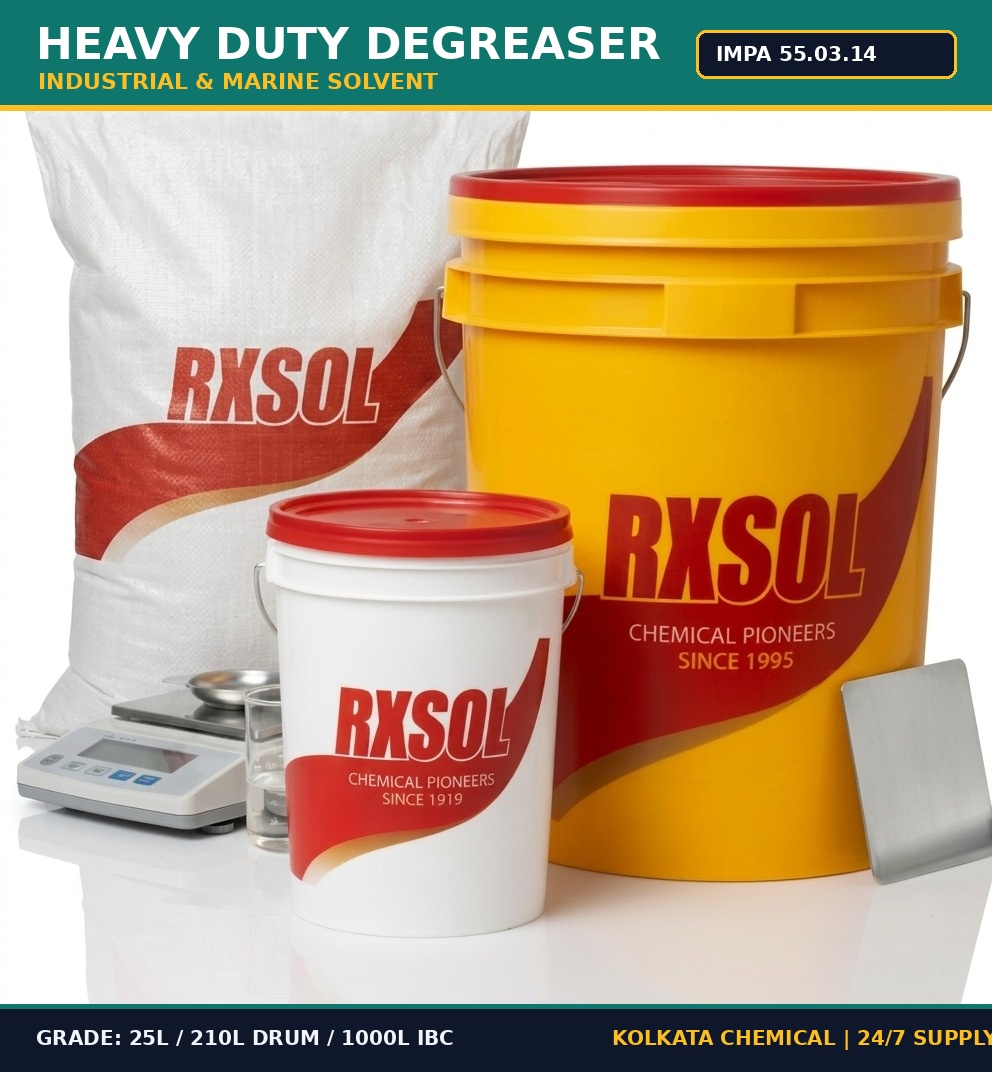
Developed prodcut to remove color from cargo tank surfaces. It is particularly effective when loading color sensitive cargoes such as methanol, isopropyl alcohol, styrene monomer, and ethylene glycol "fiber grade." High penetrating abilities to remov

Remove color from cargo tank surfaces. Also acts as superior quality cleaner / degreaser with high penetrating abilities to remove color from cargo tank surfaces. It is particularly effective when loading color sensitive cargoes such as methanol, isopropyl alcohol, styrene monomer, and ethylene glycol "fiber grade."

RXSOL ORG DICHLOR is a  Mixture of Emulsifier, new technology alkaline REDUCING agent  , And its blend of  Corrosion  inhibitors, Rust  preventive makes it unique and better among all product available in market.


RXSOL ORG DICHLOR is a highly concentrated liquid cleaner fortified with alkaline detergent builders. These builders dissolve fatty food soils and attack burned-on soil. RXSOL ORG DICHLOR is heavily chlorinated for extra strength against protein soils. It also contains high pH stable hard water conditioners to prevent precipitation


Application

**These products become more aggressive with temperature increase, and should not be allowed to dry on tank walls or stored in cargo tanks as cleaning solution or slops.

ORG DICHLOR Bleach will –

Remove odors.
Remove color.
Improve permanganate time.

Dose

Spraying – Following rough washing to a good Water White or better, apply dilute RXSOL ORG DICHLOR to 1 – 3% strength.  First wet the tank surface (spray with DI water), then spray all over with Bleach, wait 30 minute (but do not allow to dry) and then rinse very well with DI water, including the tank top towards the sump.  To ensure that you have covered all areas properly, this process should be carried out at least twice with good DI water.

Injection– no.

Re-circulation– Following rough washing  to a good Water White standard or better, apply dilute RXSOL ORG DICHLOR  to 1-3% strength.  Mix sufficient Bleach with fresh water in the tank and heat this mixture to 40 – 50 0 C, circulate through the drop line if fitted and than circulate through butterworth machine for 3 hours.  After re-circulation immediately warm butterworth to (500 C) the tank for 3 hours at maximum pressure, increase the water temperature to 80-85 o C after 45 minutes.  Check (by smell) that there is no Bleach remaining, then fresh water rinse and dry.

** When there are a number of tanks requiring re-circulation, it may be significantly more efficient to make up a large batch or number of batches that can be transferred on between  tanks as required.

Technical specifications

* Use a strainer at the pump stack when circulating any solution.

Tank Lining – Stainless / Zinc / Epoxy / Phenolic (Extreme care must be taken if product other than bleach substitute is to be used in any coated space).

Note
Effectively cleans Gasoline CARGO, DYE REMOVER-ORG DICHLOR effectively cleans red, gree yellow stains from the TANK SURFACE.
 
DYE REMOVER-ORG DICHLOR is alkaline Mixtures to clean GASOLINE cargo.
 
DYE REMOVER-ORG DICHLOR water soluble cleaner and effectively cleans cargo stains higher than 60 degree.
 
DYE REMOVER-ORG DICHLOR free from solvents. And safe to use on epoxy coating and zinc coated surface.
 
DYE REMOVER-ORG DICHLOR is completely biodgradable.
Remarks / Precaution
TYPICAL RECIRCULATION METHOD :
 
Take 10% to 20% DYE REMOVER-ORG DICHLOR with water, Then increase heating more than 60 degree for heavy stains. 
Packing sizes
DYE REMOVER-ORG DICHLOR tank cleaning detergent available in 25 Ltr and 210 Ltr PACK
MSDS

Product Name : DYE REMOVER-ORG DICHLOR 
Product Type : RXSOL-20-2018-025

Material Identity                                                        
General or Generic ID: SALTS
Company Details:

RX MARINE INTERNATIONAL
105, A wing , BSEL , TECH PARK.
VASHI ,NEW BOMBAY 400703 INDIA

Stock point : Mumbai, Kandla, Kolkata, Chennai, Vizag, Fujairah, Muscat, Nairobi

Phone : +91 22 65113333 / 5555 / 9999 / 27611360
Fax : +91 22 2781 1318 :::AOH :0091 9821214367
Email : mail@rxmarine.com 
Website : www.rxmarine.com

Chemica Name CAS # % BY WEIGHT
WATER 7732-18-5 15.0- 20.0
PROPRIETORY BLEND OF POLYMER surfactant ---------------- 65 - 70
SODIUM HYPOCHLORITE 7681-52-9 12.0- 15.0

Eye   Can cause permanent eye injury.  Symptoms include stinging, tearing, redness, and swelling of eyes.  Can injure the cornea and  cause blindness.   
 Skin    Can cause permanent skin damage.  Symptoms may include redness, burning, and swelling of skin, burns, and other skin damage. Additional symptoms of skin contact may include:  skin blistering,  hair loss, Passage of this material into the body through the skin is possible, but it is unlikely that this would result in harmful  effects during safe handling and use.
Swallowing   Swallowing this material may be harmful or fatal.  Symptoms may  include severe stomach and intestinal irritation (nausea, vomiting, diarrhea), abdominal pain, and vomiting of blood. Swallowing this material may cause burns and destroy tissue in the  
mouth, throat, and digestive tract.  Low blood pressure and shock may occur as a result of severe tissue injury. 
  Inhalation     It is possible to breathe this material under certain conditions of handling and use (for example, during heating, spraying, or      stirring).  Breathing this material may be harmful or fatal.        Symptoms may include severe irritation and burns to the nose,       throat, and respiratory tract.
Symptoms of Exposure   Signs and symptoms of exposure to this material through breathing,  swallowing, and/or passage of the material through the skin may    include:  stomach or intestinal upset (nausea, vomiting, diarrhea) cough, tight feeling in the chest, difficult breathing, lung edema  (fluid buildup in the lung tissue), lung damage, shock, coma, and   death. 
Target Organ Effects   This material (or a component) has been shown to lower activity of certain immune system cells in experimental animals.  The    significance of this effect with respect to human health is  uncertain.  
Developmental Information   There are no data available for assessing risk to the fetus from  maternal exposure to this material. 
Cancer Information  Based on the available information, this material cannot be classified with regard to carcinogenicity.  This material is not  listed as a carcinogen by the International Agency for Research on Cancer, the National Toxicology Program, or the Occupational Safety and Health Administration. 
Other Health Effects  When combined with an acid or ammonia, sodium hypochlorite may produce chlorine or chloramine gas, respectively.  Inhalation of  these gases results in coughing, choking, difficult breathing, and  other symptoms of respiratory tract irritation.  Fluid may collect in the lung tissue following a severe gas exposure. 
Primary Route(s) of Entry    Inhalation, Skin contact, Eye contact.
 

Eyes           If material gets into the eyes, immediately flush eyes gently with  
       water for at least 15 minutes while holding eyelids apart.  If      
       symptoms develop as a result of vapor exposure, immediately move    
       individual away from exposure and into fresh air before flushing    
       as recommended above.  Seek immediate medical attention. 
Skin          Immediately flush skin with water for at least 15 minutes while     
       removing contaminated clothing and shoes.  Seek immediate medical   
       attention.  Wash clothing before reuse and discard contaminated     
       shoes.  
Swallowing         Seek immediate medical attention.  Do not induce vomiting.          
       Vomiting will cause further damage to the mouth and throat.  If     
       individual is conscious and alert, immediately rinse mouth with     
       water and give milk or water to drink.  If possible, do not leave   
       individual unattended.
Inhalation        If symptoms develop, immediately move individual away from          
       exposure and into fresh air.  Seek immediate medical attention;     
       keep person warm and quiet.  If person is not breathing, begin      
       artificial respiration.  If breathing is difficult, administer      
       oxygen. 
Note to Physicians          Preexisting disorders of the following organs (or organ systems)    
       may be aggravated by exposure to this material:  skin, lung (for    
       example, asthma-like conditions), immune system. 

Flash Point   Not applicable 
Explosive Limit  Not applicable
Autoignition Temperature   No data   
Hazardous Products of Combustion May form:  chlorine
Fire and Explosion Hazards    No special fire hazards are known to be associated with this        
 product.   
Extinguishing Media  Use an extinguishing media appropriate for surrounding fire.. 
Fire Fighting Instructions         Water may be used to keep fire-exposed containers cool until fire   
       is out.  Wear a self-contained breathing apparatus with a full      
       facepiece operated in the positive pressure demand mode with        
       appropriate turn-out gear and chemical resistant personal           
       protective equipment.  Refer to the personal protective equipment   
       section of this MSDS.
NFPA Rating  Health - 3, Flammability - 0, Reactivity - 1


Small Spill            Dilute with water and absorb onto a noncombustible absorbent        
       material.  
Large Spill         Prevent run-off to sewers, streams or other bodies of water. If     
       run-off occurs, notify proper authorities as required, that a       
       spill has occurred.  Collect and add slowly to large volume of      
       water.  Persons not wearing protective equipment should be          
       excluded from area of spill until clean-up is completed.  Stop      
       spill at source.  Dike to prevent spreading.  Pump to salvage       
       tank. 


Handling        Containers of this material may be hazardous when emptied.  Since   
       emptied containers retain product residues (vapor, liquid, and/or   
       solid), all hazard precautions given in the data sheet must be      
       observed.  Emergency eyewash fountains and safety showers should    
       be available in the immediate vicinity of potential exposure
 

Eye Protection     Chemical splash goggles and face shield (8" min.) in compliance     
       with OSHA regulations are advised; however, OSHA regulations also   
       permit other type safety glasses. (Consult your industrial          
       hygienist.)  
Skin Protection           Wear impervious gloves (consult your safety equipment supplier).    
       To prevent skin contact, wear impervious clothing and boots.. 
Respiratory Protections          If overexposure has been determined or documented, a NIOSH/MSHA     
       jointly approved air supplied respirator is advised in absence of   
       proper environmental control.  OSHA regulations also permit other   
       NIOSH/MSHA respirators under specified conditions.  (See your       
       safety equipment supplier.)  Engineering or administrative          
       controls should be implemented to reduce exposure.
Engineering Controls           Provide sufficient mechanical (general and/or local exhaust)        
       ventilation to maintain exposure below level of overexposure (from  
       known, suspected or apparent adverse effects).  
Exposure Guidelines    Component    
WATER (7732-18-5)    No exposure limits established 
SODIUM HYPOCHLORITE (7681-52-9)   No exposure limits established   

Boiling Point     (for component) 212.0 F (100.0 C) 
Vapor Pressure      (for component) 17.500 mmHg  
Specific Vapor Density       No data   
Specific Gravity       1.220 - 1.250 @ 68.00 F
Liquid Density     

10.400 lbs/gal @ 68.00 F 1.250 kg/l @ 20.00 C   

Percent Volatiles     87.5% 
Evaporation Rate     SLOWER THAN ETHYL ETHER  
Appearance     No data  
State     LIQUID  
Physical Form     HOMOGENEOUS SOLUTION 
Color     CLEAR TO YELLOW LIQUID   
Odor      CHLORINATED BLEACH ODOR 
pH       13.5   
Solubility in Water     SOLUBLE    


Hazardous Polymerization     Product will not undergo hazardous polymerization.  

No data 

No data

Waste Management Information     Dispose of in accordance with all applicable local, state and federal regulations.    

DOT Information    - 49 CFR 172.101  
 DOT Description:     HYPOCHLORITE SOLUTIONS,8,UN1791,III   
Container/Mode:      55 GAL DRUM/TRUCK PACKAGE 
NOS Component:      Not applicable    
RQ (Reportable Quantity)     - 49 CFR 172.101  
Product Quantity (lbs)    Component    


-------\Chemical Inventory Status - Part 1\---------------------------------
  Ingredient                                       TSCA  EC   Japan  Australia
  -----------------------------------------------  ----  ---  -----  ---------
  Sodium Hypochlorite (as NaOCl) (7681-52-9)        Yes  Yes   Yes      Yes                                     
  Water (7732-18-5)                                              Yes  Yes   Yes      Yes                                     
 
  --------\Chemical Inventory Status - Part 2\---------------------------------
                                                          --Canada--
  Ingredient                                       Korea  DSL   NDSL  Phil.
  -----------------------------------------------  -----  ---   ----  -----                

  Sodium Hypochlorite (as NaOCl) (7681-52-9)        Yes   Yes   No     Yes  
Water (7732-18-5)                                              Yes   Yes   No     Yes
 
  --------\Federal, State & International Regulations - Part 1\----------------
                                             -SARA 302-    ------SARA 313------
  Ingredient                                 RQ    TPQ     List  Chemical Catg.
  -----------------------------------------  ---   -----   ----  --------------
  Sodium Hypochlorite (as NaOCl) (7681-52-9) No    No      No         No
  Water (7732-18-5)                                       No    No      No         No
 
  --------\Federal, State & International Regulations - Part 2\----------------
                                                        -RCRA-    -TSCA-
  Ingredient                                 CERCLA     261.33     8(d)
  -----------------------------------------  ------     ------    ------
  Sodium Hypochlorite (as NaOCl)             100        No         No         
  (7681-52-9)
  Water (7732-18-5)                                 No         No         No                                                               
 
 
Chemical Weapons Convention:  No     TSCA 12(b):  No     CDTA:  No
SARA 311/312:  Acute: Yes      Chronic: No   Fire: No  Pressure: No
Reactivity: No          (Mixture / Liquid)


Australian Hazchem Code: None allocated.
Poison Schedule: S5
WHMIS:
This MSDS has been prepared according to the hazard criteria of the Controlled Products Regulations (CPR) and the MSDS contains all of the information required by the CPR


The information accumulated herein is believed to be accurate but   
       is not warranted to be whether originating with the company or      
       not. Recipients are advised to confirm in advance of need that the  
       information is current, applicable, and suitable to their           
       circumstances.                                                                                        

Need a quote for this product?

Tell us the grade, packing and quantity you need — we ship across India and to major ports.

Request a quote office@kolkatachemical.com