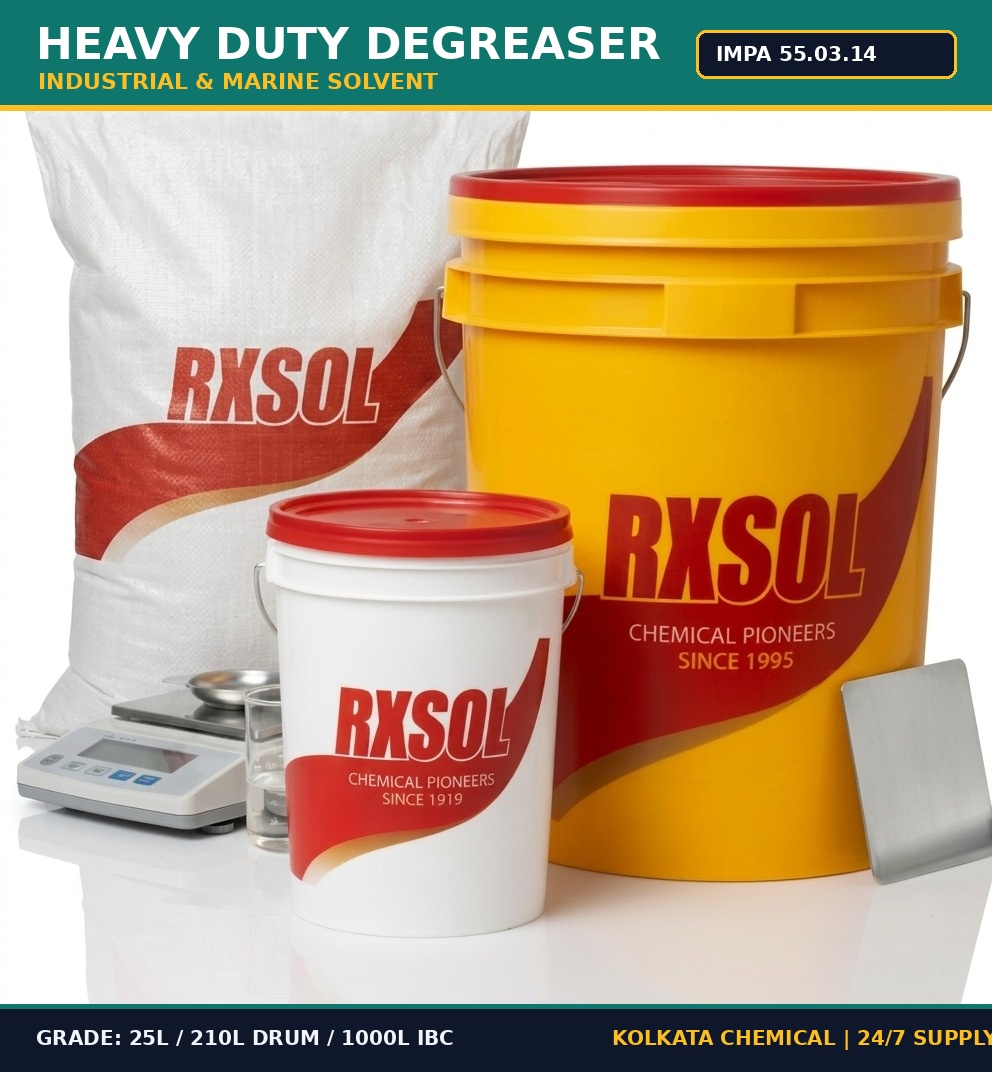
Premium Quality Deck Cleaner manufacturer, Exporter and supplier. DECK CLEANER protects the surface from scratch as No hard scrubbing or rubbing is required. Easily cleans oxidation (graying), mold, algae, and in some cases, a very deteriorated stain that has failed, This is a multipurpose product specialy formulated to remove grime, dirt, and oily deposits from concrete, steel, and wooden decks.
After USING this product, For BRIGHTNING of FLOOR use DECK BRIGHTNER RXSOL-13-1015-020 ( www.rxmarine.com/floor-polish-self-shining-liquid )
The main purpose of deck cleaners is to remove contaminants such as dirt, oxidation (graying), mold, algae, and in some cases, a very deteriorated stain that has failed.
Note: Deck cleaners are not designed to remove old stains. You would need a deck stain stripper for this.
- Ideal for deck and concrete preparation and maintenance
- Cleans and degreases decks, concrete and more
- Non-toxic, biodegradable
Free from caustic / Alkali based materials, While general Deck cleaners are typically made up of caustics soaps that will aid in the scrubbing or pressure washing of your wood during the prepping process. Most deck cleaners will raise the pH balance of the wood resulting in a neutralizing acid (deck brightener) application to cancel the caustic of the cleaner, leaving the wood in a neutral state.
OTHER DECK CLEANER :::
Oxygenated Deck Cleaners
These cleaners contain the active ingredient Sodium Percarbonate. Deck cleaners that contain this ingredient will also contain additional surfactants that will effectiveness when cleaning exterior wood. These cleaners come in powdered concentrates that are mixed with water then applied to the wood’s surface. Best applied with a garden pump sprayer then scrubbed or lightly pressure washed off.
Feature : Environmentally safe and effective cleaner. Very cost effective. Excellent at removal of contaminants.
Cons: Must be mixed with water to desired concentration. Only active for 30 minutes. Some need warm water for best results.
Bleach Based Deck Cleaners
Many of the older deck cleaners contained the active ingredient called Sodium Hypochlorite or what is commonly known as “bleach”. These deck cleaners will contain bleach that “whiten” the wood and some additional soapy surfactants that will aid in the cleaning of dirt and grime. Bleach based cleaners have recently been found to damage the wood’s lignin that help bind the cellular structure of the wood.
Feature : Premixed in liquid form. Excellent mold and algae remover.
Cons: May damage the wood cells. Average cleaner.
RXSOL brand other valuable chemicals products, RXSOL NEW ORG, Degreaser,ACC Coil Cleaner, Carbon remover, Rust remover, Dish wash, Hand cleaner etc.

| Product Name | Deck Cleaner |
| Part Number | RXSOL-16-3013-025 |
Company Details:
RX MARINE INTERNATIONAL
105, A wing , BSEL , TECH PARK.
VASHI ,NEW BOMBAY 400703 INDIA
Branch : Kandla , Mumbai, Chennai, Vizag, Kolkata, UAE, OMAN and KENYA
| Phone | +91 22 20871200 - 1400 |
| Fax | +91 22 20871500 :::AOH :0091 9821214367 |
| 123@rxmarine.com | |
| Website | www.rxmarine.com |

| Name of Substance | Cas Number | Weight | GHS Classification |
| Sodium Percarbonate | 15630-89-4 | 50-60% | OX. SOL. CAT 3, ACUTE TOX CAT 4 (ORAL), EYE DAM CAT 1 |
| Soda Ash | 497-19-8 | 20-30% | EYE IRRIT. CAT 2A |
| Alcohols, C9-11, ethoxylated | 68439-46-3 | 614-482-0 | 7 - 10% | Xi |
| Ethylenediaminetetraacetic Acid | 64-02-8 | 200-573-9 | 5 - 10% | Xi |
| 2-Propanol | 67-63-0 | 200-661-7 | 2 - 5%% | Xi |
| Dipropylene glycol methyl ether | 34590-94-8 | --- | 2- 5 % | Xi |

| Signal Word | Danger |
| Hazard Statements |
H272 May intensify fire; oxidizer. H302 Harmful if swallowed. H315 Causes skin irritation.
H272: May intensify fire; oxidizer
H302: Harmful if swallowed
H318: Causes serious eye damage
|
| Precautionary statements - prevention |
P210: Keep away from heat, hot surfaces, sparks, open flames and other ignition sources. No smoking.
P220: Keep away from clothing and other combustible materials.
P264: Wash hands thoroughly after handling.
P270: Do not eat, drink or smoke when using this product.
P280: Wear protective gloves/protective clothing/eye protection/face protection.
P210: Keep away from heat, hot surfaces, sparks, open flames and other ignition sources. No smoking.
P220: Keep away from clothing and other combustible materials.
P264: Wash hands thoroughly after handling.
P270: Do not eat, drink or smoke when using this product.
P280: Wear protective gloves/protective clothing/eye protection/face protection.
|
| Precautionary statements - |
P370+P378: In case of fire: Use media documented in section 5 to extinguish.
P301+P312: IF SWALLOWED: Call a POISON CENTER/ doctor if you feel unwell.
P330: Rinse mouth.
P305+P351+P338: IF IN EYES: Rinse cautiously with water for several minutes. Remove contact lenses, if present and
easy to do. Continue rinsing.
P310: Immediately call a POISON CENTER/doctor.P370+P378: In case of fire: Use media documented in section 5 to extinguish.
P301+P312: IF SWALLOWED: Call a POISON CENTER/ doctor if you feel unwell.
P330: Rinse mouth.
P305+P351+P338: IF IN EYES: Rinse cautiously with water for several minutes. Remove contact lenses, if present and
easy to do. Continue rinsing.
P310: Immediately call a POISON CENTER/doctor.
|
| Other Hazard |
INHALATION: Inhalation of dust may cause respiratory irritation.
EYE: May cause severe irritation with pain and redness.
SKIN: May cause irritation. Repeated exposure may cause dryness or cracking.
INGESTION: May be harmful if swallowed. Ingestion may cause gastrointestinal irritation, nausea, vomiting and Diarrhea.
|

| Description of first aid measures | Contaminated individuals of chemical exposure must be taken for medical attention if any adverse effect occurs. Rescuers should be taken for medical attention, if necessary. Take copy of label and SDS to health professional with contaminated individual. |
| Eye Contact |
Check for and remove any contact lenses. In case of contact, immediately flush eyes with plenty of water for at least 15 minutes. Cold water may be used. Get medical attention. |
| Skin Contact | In case of contact, immediately flushes skin with plenty of water for at least 15 minutes while removing contaminated clothing and shoes. Cover the irritated skin with an emollient. Cold water may be used.Wash clothing before reuse. Thoroughly clean shoes before reuse. Get medical attention. |
| Inhalation: | Move to fresh air. If breathing is difficult, give oxygen. Get medical attention immediately if symptoms occur. |
| Ingestion: | Do not induce vomiting. Obtain medical attention.If vomiting occurs, lean patient forward or place on left side (head-down position, if possible) to maintain an open airway and prevent aspiration. |
| Most important symptoms and effects, both acute and delayed | This product may cause damage with direct contact to the eyes. Harmful if swallowed |
| Medical conditionsaggravated by exposure: | This material or its emissions may aggravate pre-existing disorders involving any target organs mentioned in this Safety Data Sheet as being at risk |
| Indication of immediate medical attention and special treatment needed |
Treat symptoms and reduce over-exposure.
Treat symptoms and reduce over-exposure
|
| Notes to Physician | Treat symptomatically |

| Extinguishing media | Water, alcohol-resistant foam, dry chemical or CO2 |
| Specific hazards arising from the chemical |
Oxidizer. Oxygen released in thermal decomposition may support combusstion. Contact with combustible material may cause fire. Contact with flammables may cause fire or explosions. Risk of explosion if heated under confinement Explosion Sensitivity to Static Discharge: Not Sensitive. Minimum Ignition Energy (M.I.E.) No Data at this time |
|
Explosion Sensitivity to Mechanical Impact: Not Sensitive.
Explosion Sensitivity to Static Discharge: Not Sensitive.
Minimum Ignition Energy (M.I.E.) No Data at this time
|
|
| Suitable extinguishing media | Use extinguishing measures that are appropriate to local circumstances and the surrounding environment. |
|
Hazardous combustion products |
Fire may cause the evolution of Sulphur oxides, nitrogen oxides. |
| Protective Equipment | Use personal protective equipment. |
| Specific Hazards Arising from the Chemical |
Has a fire-promoting effect due to the release of oxygen. Ambient fire may liberate hazardous vapours. |

| Small Spill | Collect and transfer to secondary container to be properly disposed. |
| Large Spill: |
Eliminate all ignition sources (flares, flames including pilot lights, electrical sparks, etc.) Persons not wearing protective equipment should be excluded from area of spill until clean-up has been completed. Sweep up and shovel into suitable
|
| Spillage | Oxidizing material. Stop leak if without risk. Avoid contact with a combustible material (wood, paper, oil, clothing...). Keep substance damp using water spray. Do not touch spilled material. Prevent entry into sewers, basements or confined areas dike if needed. Eliminate all ignition sources. Call for assistance on disposal. |
| Personal Protection | Advice for non-emergency personnel: Avoid inhalation of dusts. Evacuate the danger area, observe emergency procedures, consult an expert. Advice for emergency responders: Protective equipment see section 8. |
| Enviromental Precaution | Do not let product enter drains. |
|
Methods and materials for containment and cleaning |
Cover drains. Collect, bind, and pump off spills. Observe possible material restrictions (see sections 7 and 10). Take up dry. Dispose of properly. Clean up the affected area. Avoid generation of dust |

| Handling |
Keep away from heat. Keep away from sources of ignition. Keep away from combustible material.. Empty containers pose a fire risk, evaporate the residue under a fume hood. Ground all equipment containing material. Do not ingest. Do not breathe dust. Wear suitable protective clothing. In case of insufficient ventilation, wear suitable respiratory equipment. If ingested, seek medical advice immediately and show the container or the label. Avoid contact with skin and eyes. Keep away from incompatibles such as reducing agents, combustible materials, organic materials, metals |
| Storage |
Strong Oxidizer. Moisture Sensitive. Keep container tightly closed. Keep container in a cool, well-ventilated area. Separate from acids, alkalies, reducing agents and combustibles. See NFPA 43A, Code for the Storage of Liquid and Solid Oxidizers. Do not store above 23°C (73.4°F). |
| Specific end uses | Cleaning product |
| Advice on general occupational hygiene | Advice on safe handling Observe label precautions. Change contaminated clothing. Wash hands after working with substance. |

Control parameters
PARTICULATES NOT OTHERWISE REGULATED RESPIRABLE FRTWA OSHA TWA/5 mg/m3 PARTICULATES NOT OTHERWISE REGULATED TOTAL DUST OSHA TWA/15 mg/m3
TWA
OSHA 5 mg/m3
TWA
OSHA 5 mg/m3
|
|||||||||||||
| Exposure Controls | Currently, International exposure limits are not established for the components of this product. Please check with competent authority in each country for the most recent limits in place. | ||||||||||||
| Engineering Control | Use process enclosures, local exhaust ventilation, or other engineering controls to keep airborne levels below recommended exposure limits. If user operations generate dust, fume or mist, use ventilation to keep exposure to airborne contaminants below the exposure limit. | ||||||||||||
| Personal Protection |
Eye/face Protection: Wear appropriate protective eyeglasses or chemical safety goggles as described by OSHA's eye and face protection regulations in 29 CFR 1910.133 or European Standard EN166. Skin and body protection: Wear appropriate protective gloves and clothing to prevent skin exposure. Respiratory Protection : Follow the OSHA respirator regulations found in 29 CFR 1910.134 or European Standard EN 149. Use a NIOSH/MSHA or European Standard EN 149 approved respirator exposure limits are exceeded or if irritation or other symptoms are experienced. |
||||||||||||
| Other Protection Measure | Handle in accordance with good industrial hygiene and safety practice. | ||||||||||||
| Exposure Limit | Not Available |
Gloves Suit

Information on basic physical and chemical properties
| PHYSICAL STATE: | Powder |
| ODOR: | Odorless |
| ODOR THRESHOLD (PPM): | Not Available |
| APPEARANCE / COLOR: | White Powder |
| pH: | 10.5-11.0 |
| MELTING / FREEZING POINT (F°): | Not Applicable |
| BOILING POINT (F°): | Not Applicable |
| FLASH POINT (F°): | Not Applicable |
| EVAPORATION RATE (nBuAc = 1): | Not Applicable |
| FLAMMABILITY (solid, gas) | Not Applicable |
| FLAMMABLE LIMITS (in air by volume, %): | Not Applicable |
| VAPOR PRESSURE (mmHg): | Not Applicable |
| VAPOR DENSITY (AIR=1): | Not Applicable |
| RELATIVE DENSITY | Not Applicable |
| SOLUBILITY IN WATER (%) | 150 g/l in water @20C |
| PARTITION COEFFICIENT: N-OCTANOL/WATER: | Not Applicable |
| AUTOIGNITION TEMPERATURE | Not Applicable |
| DECOMPOSITION TEMPERATURE: | Not Applicable |
| VISCOSITY: | Not Applicable |
| EXPLOSIVE PROPERTIES: | Not Applicable |
| OXIDISING PROPERTIES: | Not Applicable |
| Other Information | |
| SPECIFIC GRAVITY 4°C: (Water = 1) | .95 – 1.2 |
| PERCENT SOLIDS BY WEIGHT: | 100% |
| VOC: | Not Applicable |
| Form | Solid |
| Colour | White |
| Odour | Odourless |
| Odor Threshold | Not Applicable |
| pH | 3.2 - 3.5 at 100 g/l 20 °C |
| Melting Point | 120 °C (decomposition) |
| Boiling Point | Not Applicable |
| Flash Point | Not Applicable |
| Evaporation Rate | Not Applicable |
| Flammability (solid, gas) | No Data Available |
| Explosive limits | No Data Available |
| Vapour pressure | No Data Available |
| Vapour Density | No Data Available |
| Specific Gravity | 1.98 g/cm3 at 20 °C |
| Partition coefficient | No data available |
| Explosive properties | None |
| Solubility | Soluble in water 620 g/l at 20 °C |
| Ignition temperature | No information available. |

| Reactivity | Strong Alkali , Bases. |
| Chemical Stability: | Product is stable under recommended storage conditions |
| Possibility of Hazardous Reactions: | No data available. |
| Conditions to avoid | Avoid dust generation. Avoid exposure to heat, sources of ignition, and open flame. |
| Incompatible materials: | Incompatible with acids, bases, combustible materials, organic materials, reducing agents,moisture, flammable materials, permanganates |
| Stability | The product is chemically stable under standard ambient conditions (room temperature). |
| Hazardous Decomposition Products | : Oxygen |
| Possibility of hazardous reactions | Risk of explosion with:, Risk of ignition or formation of inflammable gases or vapours with:,Exothermic reaction with:strong alkalis, bases, combustible substances, Iron, Zinc, hydrogen peroxide, peroxi compounds, Copper, silver compounds, Powdered metals |
| Conditions to avoid | Strong Heating |
| Incompatible materials | No Data Available |
| Hazardous Polymerization | Hazardous polymerization does not occur. |

Information on Toxicological Effects
| TOXICITY DATA: |
There is no available data for the product, only for the ingredients 15630-89-4 LD50, Oral - Rat 1034 mg/kg 497-19-8 LD50, Oral - Rat 4,090 mg/kg |
| POTENTIAL HEALTH HAZARDS OR RISKS FROM EXPOSURE | |
| CARCINOGENICITY | Ingredients within this product are not found on the following lists: FEDERAL OSHA Z LIST, NTP, IARC, or CAL/OSHA and therefore are not considered to be, nor suspected to be, cancer-causing agents by these agencies. |
| IRRITANCY OF PRODUCT: | : Exposure with this product can be irritating to exposed skin, eyes and respiratory system |
| SENSITIZATION OF PRODUCT | : This product is not considered a skin sensitizer |
| REPRODUCTIVE TOXICITY INFORMATION | : This product does not contain components which are documented as reproductive hazards |
| Rout Of Entry | Inhalation. Ingestion. |
| Toxicity to Animal | WARNING: THE LC50 VALUES HEREUNDER ARE ESTIMATED ON THE Acute oral toxicity (LD50): 689 mg/kg [Rat]. |
| Toxic Effects on Human | May cause damage to the following organs: upper respiratory tract. Other Toxic Effects on Humans: Hazardous in case of skin contact (irritant, sensitizer), of ingestion, of inhalation (lung irritant, lung sensitizer). |
| Special Remarks on other Toxi Effects on Humans: |
Acute Potential Health Effects: Skin: Causes skin irritation. May cause skin sensitization, an allergic reation, which becomes evident upon re-exposure to this material. Eyes: Causes eye irritation. Ingestion: Causes gastrointestinal (digestive) tract irritation with nausea, vomiting, and diarrhea. May be harmful if swallowed. Inhalation: Causes respiratory tract irritation. May cause chemical pneumonitis and pulmonary edema, inflammation, edema of bronchi and larynx. Chronic Potential Health Effects: Repeated or prolonged skin exposure may cause allergic reactions in sensitive individuals. Repeated or prolonged exposure by inhalation may affect respiration and metabolism. |

ALL WORK PRACTICES MUST BE AIMED AT ELIMINATING ENVIRONMENTAL CONTAMINATION.
Toxicity
| TOXICITY DATA | There is no available data for the product. |
| Persistence and degradability | No specific data available on this product |
| ioaccuBmulative potential | No specific data available on this product. |
| Mobility in soil | No specific data available on this product |
| Results of PBT and vPvB assessment | No specific data available on this product. |
| Other adverse effects | No specific data available on this product. |
| Eco Toxicity | Not Available |
| COD and BOD 5 | Not Available |
| Products Biodegradation: | The methods for determining the biological degradability are not applicable to inorganic substances. |
| Mobility in soil | No Information available |
| Results of PBT and vPvB assessment | PBT/vPvB assessment not available as chemical safety assessment not required/not conducted. |
| Other adverse effects | Henry constant : Transition from water solution into the atmosphere is not to be expected. |

| Waste treatment Method | Waste material must be disposed of in accordance with the national and local regulations. Leave chemicals in original containers. No mixing with other waste. Handle uncleaned containers like the product itself |

DOT/TDG/IATA/IMDG
| UN Number | Not applicable |
| Proper shipping name | Consumer Commodity |
| Hazard Class NUMBER and DESCRIPTION: | ORM-D |
| UN IDENTIFICATION NUMBER | N/A |
| Packing group | N/A |
| DOT LABEL(S) REQUIRED: | N/A |
| NORTH AMERICAN EMERGENCY RESPONSE GUIDEBOOK NUMBER (2016): | N/A |
| MARINE POLLUTANT: | None of the ingredients are classified by the DOT as a Marine Pollutant (as defined by 49 CFR 172.101, Appendix B) |
| NOTE: | Consumer commodity when transported via ground in original packaging. |

Safety, health and environmental regulations/legislation specific for the substance or mixture
UNITED STATES REGULATIONS
| SARA REPORTING REQUIREMENTS: | This product is not subject to the reporting requirements of Sections 302,304 and 313 of Title III of the Superfund Amendments and Reauthorization Act |
| TSCA: | All components in this product are listed on the US Toxic Substances Control Act (TSCA) inventory of Chemical |
|
Fedral and State Regulation |
Connecticut hazardous material survey.: Ammonium persulfate New Jersey: Ammonium persulfate TSCA 8(b) inventory: Ammonium persulfate |
| Other Regulation | OSHA: Hazardous by definition of Hazard Communication Standard (29 CFR 1910.1200). EINECS: This product is on the European Inventory of Existing Commercial Chemical Substances. |
| WHMIS (Canada) | CLASS C: Oxidizing material. |
| DSCL (EEC) | R8- Contact with combustible material may cause fire. R20/22- Harmful by inhalation and if swallowed. R36/37/38- Irritating to eyes, respiratory system and skin. R42/43- May cause sensitization by inhalation and skin contact. S22- Do not breathe dust. S24- Avoid contact with skin. S26- In case of contact with eyes, rinse immediately with plenty of water and seek medical advice. S37- Wear suitable gloves. |
| HMIS | |
| Health Hazard | : 2 |
| Fire Hazard | : 1 |
| Reactivity | : 3 |
| Personal Protection | : E |
| Fire : | |
| Health Hazard | : 2 |
| Fire Hazard | : 1 |
| Reactivity | : 3 |
| Specific Hazard | : |

HMIS RATING
|
|||||||||
| Caution: | HMIS and NFPA ratings are based on a 0-4 rating scale | ||||||||
| 0= Minimal Hazard, 1= Slight, 2= Moderate, 3= High, 4= Extreme | |||||||||
| MANUFACTURER SUPPLEMENTAL NOTES: | For industrial use only. Keep out of reach of children. Failure to use caution may cause serious injury or illness. Never siphon by mouth. | ||||||||
| DATA SOURCES: | Some of the information presented and conclusions drawn herein are from sources other than direct test data on the product itself. The information in this SDS was obtained from sources which we believe are reliable. However, the information is provided without any warranty, express or implied, regarding its correctness. | ||||||||
| ADDITIONAL SDS INFORMATION | The conditions or methods of handling, use, and disposal of the product are beyond our control and may be beyond our knowledge. For this and other reasons, we do not assume responsibility for loss, damage or expense arising out of, or in any way connected with the handling, storage, use, or disposal of the product. | ||||||||
| GENERAL STATEMENTS: | Key or Legend to abbreviations and acronyms | ||||||||
| NTP Carcinogenicity Status: | 1 - Known to be Human Carcinogens; 2 - Reasonably anticipated to be a human carcinogen | ||||||||
| AIHA | - American Industrial Hygiene Association | ||||||||
| ACGIH | American Conference of Governmental Industrial Hygienists | ||||||||
| CASRN | Chemical Abstract Services Registry Number | ||||||||
| CFR | Code of Federal Regulations | ||||||||
| D.O.T | United States Department of Transportation | ||||||||
| IARC | International Agency for Research on Cancer | ||||||||
| OSHA | Occupational Safety and Health Administration | ||||||||
| NIOSH | National Institute for Occupational Safety and Health | ||||||||
| NTP | National Toxicology Program | ||||||||
| PPM | Parts per million | ||||||||
| mg/m3 | milligram per cubic meter | ||||||||
| kg | kilogram | ||||||||
| L or l | Liter | ||||||||
| n.o.s | not otherwise specified | ||||||||
| Lbs. | Pounds | ||||||||
| mm2/s | - millimeters squared per second | ||||||||
| PMCC | - Pensky-Martens Closed Cup | ||||||||
| LC50 | - Pensky-Martens Closed Cup | ||||||||
| LC50 | - Lethal Concentration 50 (concentration in water having a 50% chance of causing death to aquatic life) | ||||||||
| EC50 | Effective Concentration that causes 50% inhibition in growth or mobilization | ||||||||
| Other Information |
The information above is believed to be accurate and represents the best information currently available to us. However, we make no warranty of merchantability or any other warranty, express or implied, with respect to such information, and weassume no liability resulting from its use. Users should make their own investigations to determine the suitability of the information for their particular purposes. In no event shall be liable for any claims, losses, or damages of any third party or for lost profits or any special, indirect, incidental, consequential or exemplary damages, howsoever arising, even if RX Marine International has been advised of the possibility of such damages. DISCLAIMER OF LIABILITY :The information in this SDS was obtained from sources which we believe are reliable. However, the information is provided without any warranty, express or implied, regarding its correctness. The conditions or methods of handling, storage, use or disposal of the product are beyond our control and may be beyond our knowledge. For this and other reasons, we do not assume responsibility and expressly disclaim liability for loss, damage or expense arising out of or in any way connected with the handling, storage, use or disposal of the product. This MSDS was prepared and is to be used only for this product. If the product is used as a component in another product, this MSDS information may not be applicable. |