Cold Flow Improver and Pour Point Dispersant
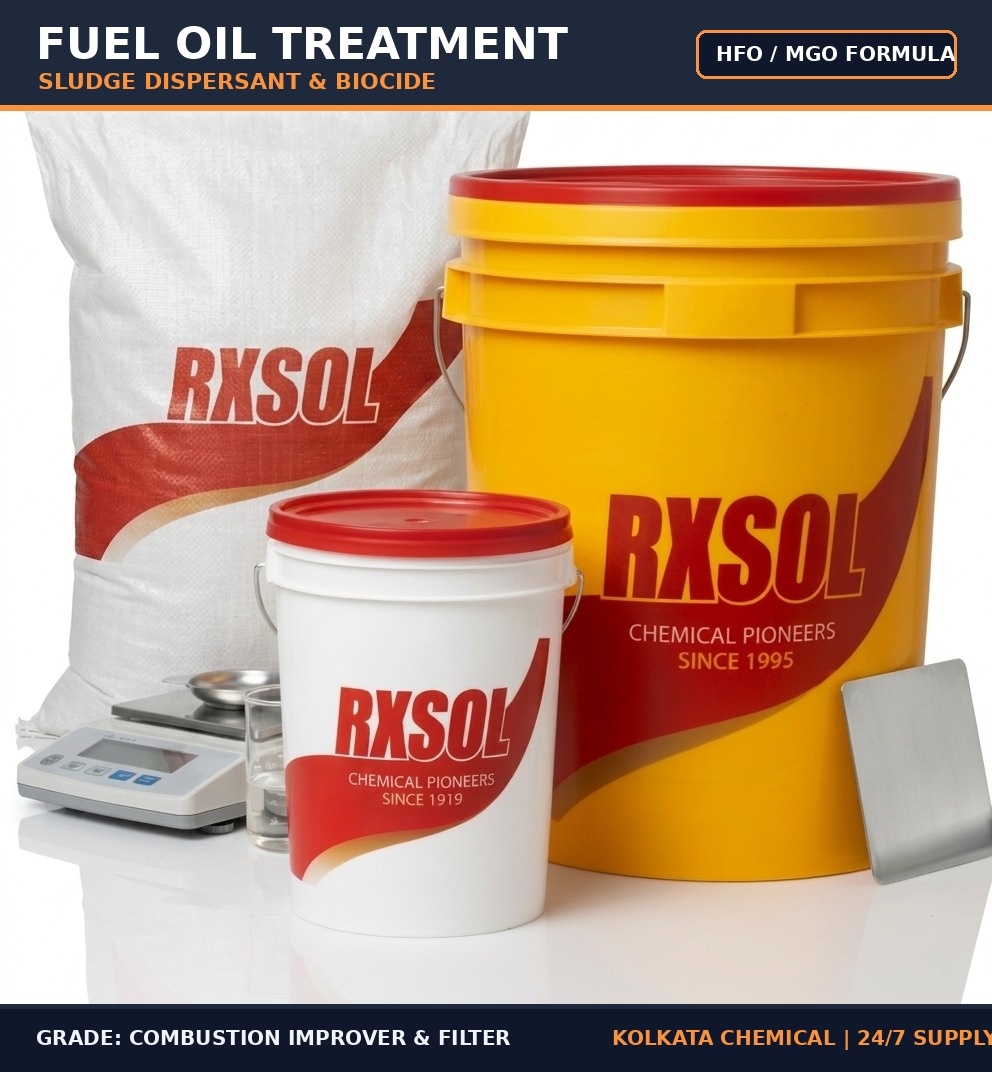
Improve the flow in winter (Low temperature). This also reduced risk of fuel waxing and solidification. This product reduces pour point and cold filter plugging point (CFPP), by an average of 15°C and 10°C respectively.
Category

RXSOL Cold Flow Improver and Pourpoint Dispersant is a versatile product to improve the flow in winter (Low temperature). This also reduced risk of fuel waxing and solidification. This product reduces pour point and cold filter plugging point (CFPP), by an average of 15°C and 10°C respectively. This brings about many safety and financial benefits to the end user

 Benefit :

  • Maintain pumpability, filterability and operability, avoiding fuel starvation and loss of propulsion
  • Improve reliability of lifeboats and other emergency equipment
  • Treat MGO storage tanks, may reduce or even eliminate heating requirements  
Application

A distillate fuel paraffin’s. The paraffin’s are quite large molecules and have a tendency to come together and form larger structures as the temperature drops in the fuel. The paraffin’s can also be referred to as wax and a fuel with high wax content will have a tendency to cause wax formation at higher temperatures. Once the wax particles has formed they are difficult to dissolve back into the fuel. The RXSOL Cold Flow Improver and Pour Point Dispersant stoped to make the particle in fuel and maintain it flow rate.

Dose

RXSOL Cold Flow Improver and Pour Point Dispersant should be dosed to the fuel tank prior to filling. The recommended dosage is one litre to one thousand litres of fuel (1:1000 or 1000 ppm). In case of poor response, dosage can be increased to one litre to five hundred litres of fuel (1:500 or 2000 ppm)

Please note: The dosing temperature should always be at least 5oC above the measured cloud point of the fuel.

Dosage of Product

Dosage of product

1-Ton Fuel bunkered

10-Ton Fuel bunkered

50-Ton Fuel bunkered

100-Ton Fuel bunkered

1000 ppm Dose 1 ltr Dose 10 ltr Dose 50 ltr Dose 100 ltr
2000 ppm Dose 2 ltr Dose 20 ltr Dose 100 ltr Dose 200 ltr


10 Ton fuel bunkered
50 Ton bunkered
100 Ton bunkered

Technical specifications

Appearance:

 
Colour : Slightly hazy
Density : 0.895 kg/ltr
Flash Point : 60°C
Pour Point : -30°C
 
Note

Handling (Personnel)
Avoid breathing vapors or mist. Avoid contact with eyes, skin, or clothing. Wash thoroughly after handling.
Storage
Store in a well-ventilated place. Keep container tightly closed. Store in accordance with National Fire Protection Association recommendations.

Remarks / Precaution

Features & Benefits

  • Cold flow improver and pour point depressant
  • Delays the onset of paraffin crystallization to improve cold flow properties
  • Enables you to handle the fuel at lower temperatures
  • Adds safety in handling of the fuel by reducing the pour point of the fuel
  • Keep the wax crystals in suspension preventing wax fallout and accumulation
Packing sizes
25 Ltr, 50, 210, 1000 Ltr IBC tank. Ready stock at Fujairah - Dubai, Mumbai, Kolkata, Chennai, Kandla.
MSDS

Product Name : Cold Flow Improver and Pour Point Dispersant
Part Number : RXSOL-70- 7014-025

Company Details:
RX MARINE INTERNATIONAL
105, A wing , BSEL , TECH PARK.

VASHI ,NEW BOMBAY 400703 INDI

Phone +91 22 65113333 / 5555 / 9999
Fax +91 22 2781 1318 :::AOH :0091 9821214367
Email 123@rxmarine.com
Website www.rxmarine.com

Name     of        Substance                          Cas Number Wt.%
Solvent Naphtha Petroleum, Heavy
Aromatic
6472-94-5 75- 90%%
1,2,4-trimethyl benzene 95-63-6 3 - 5%
2-ethylhexanoic acid 149-57-5 1 - 5%
Naphthalene 91-20-3 0 - 5%


Signal Word                        Danger
Hazard Statements

Eye contact :  may cause eye irritation with discomfort, tearing or blurring of vision.
Skin Contact : may cause irritation.
Inhalation : Inhalation or ingestion   may cause nonspecific discomfort, such as nausea, headache, or weakness; or temporary nervous system depression with anesthetic effects such as dizziness, headache, confusion, incoordination, and loss of consciousness.
General :  In general, overexposure to high atmospheric concentrations of alkyl-substituted aromatics may produce central nervous system depression, headache, dizziness, incoordination, nausea and loss of appetite. Aspiration (liquid enters the lung), may cause lung damage due to chemical pneumonia, a condition caused by petroleum-like solvents.

Precautionary statements - prevention  Keep away from heat/sparks/open flames/hot surfaces - No smokin
Keep/store away from clothing/combustible materials.
 Keep only in original container.
P260 Do not breathe dust/fume/gas/mist/vapours/spray.
Wash thoroughly after handling.
Wear protective gloves/protective clothing/eye protection/face protection.
Precautionary statements - response  IF SWALLOWED: rinse mouth. Do NOT induce vomiting.
 IF ON SKIN : removeimmediately all contaminated clothing. Rinse skin with soap water/shower.
 IF INHALED: remove person to fresh air and keep at rest in a position comfortable for breathing. IF IN EYES: rinse cautiously with water for several minutes. Remove contact lenses, if present and easy to do. Continue rinsing.
In case of fire: use sand, carbon dioxide or powder extinguisher for extinction.
Absorb spillage to prevent material damage.


Eye Contact                   Check for and remove any contact lenses. In case of contact, immediately flush eyes with plenty of water for at least 15 minutes. Cold water may be used. Get medical attention.
Skin Contact Flush skin with water after contact. Wash contaminated clothing before reuse.
Inhalation: If inhaled, If inhaled, remove to fresh air. If not breathing, give artificial respiration. If breathing is difficult, give oxygen. Call a physician.
Ingestion: If swallowed, do not induce vomiting. Allow victim to rinse his mouth and then to drink 2-4 cupfuls of
water. Never give anything by mouth to an unconscious person. Call a physician.
Notes to Physicians Activated charcoal mixture may be administered. To prepare activated charcoal mixture, suspend 50 grams activated charcoal in 400-ml water and mix thoroughly. Administer 5 ml/kg or 350 ml for an average adult. Because of the danger of aspiration, emesis or gastric lavage should not be employed unless the risk is justified by the presence of additional toxic substances. Activated charcoal may induce vomiting, but may be given after emesis or lavage to absorb toxic additives. Steroid therapy in mild to moderate cases does not improve outcome. Bacterial pneumonia often occurs after exposure, but prophylactic antibiotics are not indicated and should be reserved for documented bacterial pneumonia.


Flammability          Flammable.
Flash Point 60°C
Suitable extinguishing media Use extinguishing measures that are appropriate to local circumstances and the surrounding environment. Water Spray, Foam, Dry Chemical, CO2.
Protective Equipment Use personal protective equipment.
Advice for firefighters Wear self-contained breathing apparatus. Wear full protective equipment.


Small Spillage         Soak up with sawdust, sand, oil dry or other absorbent material.
Personal Protection Remove persons to safety. Wear breathing apparatus if exposed to vapours/dust/spray/gases.
Enviromental Precaution Keep away from drains, surface and ground water. Retain contaminated washing water and dispose it.
Methods and materials for
containment and cleaning
Bbefore proceeding with clean up. Use appropriate PERSONAL PROTECTIVE EQUIPMENT during clean up. Soak up with sawdust, sand, oil dry or other absorbent material. Remove source of heat, sparks, flame, impact, friction, or electricity. Dike spill. Prevent material from entering sewers, waterways, or low areas. Spills are very slippery and should be cleaned up promptly


Handling           Avoid breathing vapors or mist. Avoid contact with eyes, skin, or clothing. Wash thoroughly after handling.  Keep away from heat, sparks and flames.
Storage Store in a well-ventilated place. Keep container tightly closed. Store in accordance with National Fire
Protection Association recommendations.
Advice on general occupational hygiene Wash hands after use. Do not to eat, drink and smoke in work areas. Remove contaminated clothing and protective equipment before entering eating areas.


Engineering Controls:
         
Use only with adequate ventilation. Keep container tightly closed.
Personal Protection Eye/Face Protection : Wear coverall chemical splash goggles or safety glasses.
Respirators : Where there is potential for airborne exposures in excess of applicable limits, wear NIOSH/MSHA approved respiratory protection. Protective Clothing Where there is potential for skin contact have available and wear as appropriate Impervious gloves, apron, pants, hood and jacket.
Exposure Limits:
 

Heavy Aromatic Naphtha:
PEL (OSHA) ..................................................None established
TLV (ACGIH) .................................................None established
AEL* (Innospec Fuel Specialties) .................50 ppm, 300 mg/m3, 8 hr, TWA
Naphthalene:
PEL (OSHA)..................................................10 ppm, 50 mg/m3, 8 hr. TWA
TLV (ACGIH).................................................10 ppm, 52 mg/m3, 8 hr TWA, Skin; A4
STEL 15 ppm, 79 mg/m3, A4
AEL* (Innospec Fuel Specialties) .................None established
1,2,4-trimethyl benzene :
PEL (OSHA) ..................................................140 mg/m3, 8 hr. TWA
TLV (ACGIH) .................................................None established
AEL* (Innospec Fuel Specialties) .................20 ppm, 8 hr, TWA
2-ethylhexanoic acid
PEL (OSHA) ..................................................25 ppm, skin
TLV (ACGIH) .................................................20 ppm, 8 hr TWA, A3
AEL* (Innospec Fuel Specialties) .................None established

Other Protection Measure Theskin notation following the exposure guideline refers to the potential for dermal absorption of the
material. It is intended to alert the reader that inhalation may not be the only route of exposure and thatmeasures to minimize dermal exposure should be considered.

       gloves                suit                

            Gloves                       Suit                          

Form         Liquid
Colour Clear, dark, brown
Odour Not Available
Boiling point and boiling range  168°C-195°C
Freezing Point Not Available
Specific Gravity (20 °C 0.900 @ 60/60°F (15.6/15.6°C)
pH Not Applicable
Density 7.49 @ 60°F (15.6°C)
Solubility in Water Soluble
Viscosity (cSt) 3.82
Explosive properties Not Available
Vapour density Not Available

Recativity                                             None
Stability Stable at normal temperatures and storage conditions.
Possibility of hazardous reactions No known hazardous reactions.
Incompatible materials None reasonably foreseeable.
Hazardous combustion
products
Decomposes with heat. Hazardous decomposition products include oxides of carbon and nitrogen.
Polymerization Will not occur.

Heavy Aromatic Naphtha: Inhalation 6 hour LC50......................................... >11.67 mg/L in rats
Skin Absorption LD50 .......................................... >3,160 mg/kg in rabbits
Oral LD50................................................................. >5,000 mg/kg in rats.
Naphthalene:
 
Inhalation 15 minute LC50: ....................................>0.34 mg/L in rats
Skin Absorption LD50: ............................................. 10,000 mg/kg in rabbits
Oral LD50:............................................................ ....1,780 mg/kg in rats
1,2,4-trimethyl benzene Inhalation 4 hour LC50.............................................6,700 ppm in rats
Skin absorption LD50...............................................4,320 mg/kg in rabbits
Oral ALD .................................................................... 4,500 mg/kg in rats
2-ethylhexanoic acid : Inhalation 4 hour LC50.............................................4,000 ppm in rats
Skin Absorption LD50 .............................................. 2,335 mg/kg in rabbits
Oral LD50................................................................. ..2,920 mg/kg in rats
Other information Heavy Aromatic Naphtha is a severe skin irritant, and is an eye irritant, but is not a skin sensitizer in animals. Repeated inhalation exposures caused reduced growth rate, respiratory tract irritation, congestion in liver and spleen, changes in blood tests and equilibrium disturbances. No animal test reports are available to define carcinogenic, mutagenic, developmental or reproductive hazards.

Chronic overexposure to 2-ethylhexanoic acid has been suggested as a cause of the following effects in laboratory animals and may aggravate pre-existing disorders of these organs in humans: liver, abnormalities, kidney damage, lung damage, cardiac abnormality, blood abnormalities and spleen damage. This component has produced liver and kidney effects in laboratory animals. It has also produced developmental effects in oral studies in laboratory animals including teratogenicity at maternally


Toxicity Naphthalene : 96 hour LC50 fathead minnow: 27-42 mg/L
Naphtha : 96 hour LC50, fathead minnows: 4.2 – 20.8 mg/L
Process of degradability Causes severe skin irration and eye damage.
Bioaccumulative potential Causes serious eye damage.
 Mobility in soil Shall not be classified as germ cell mutagenic, carcinogenic nor as a reproductive toxicant.


Remarks Please consider the relevant national or regional provisions. Waste shall be separated into the categories that can be handled separately by the local or national waste management facilities.
Waste Disposal  Waste  should be disposed of in according to local rule and regulation.

UN        Number                                          NA
Proper shipping name Combustible Liquid
Special Information Flash Point: 60.1°C
DOT Labs Combustible Liquid
Packing group III
Marine Pollutant No

  International Maritime Dangerous Goods Code (IMDG) : Not Regulated

TSCA Inventory Status  Reported / Included
Title III Hazard Classifications Sections 311, 312
 
Acute ................................................ Yes
Chronic ............................................. Yes
Fire ................................................... Yes
Reactivity .......................................... No
Pressure ........................................... No
Chemical Safety Assessment No Chemical Safety Assessment has been carried out for this substance.

Other Information  

The information above is believed to be accurate and represents the  best information   currently    available  to us.  However,   we   make no warranty of merchantability or any other warranty, express or implied, with respect to such information, and  we assume  no liability resulting from its use. Users should make  their  own  investigations  to determine the suitability of the information for their particular purposes. In no event shall be liable for any claims, losses, or damages of any third party or for lost profits or any special, indirect, incidental, consequential or exemplary damages, howsoever arising, even if Rx Marine International  has been advised of the possibility of such damages.

DISCLAIMER OF LIABILITY :The information in this SDS was obtained from sources which we believe are reliable. However, the information is provided without any warranty, express or implied, regarding its correctness. The conditions or methods of handling, storage, use or disposal of the product are beyond our control and may be beyond our knowledge. For this and other reasons, we do not assume responsibility and expressly disclaim liability for loss, damage or expense arising out of or in any way connected with the handling, storage, use or disposal of the product. This MSDS was prepared and is to be used only for this product. If the product is used as a component in another product, this MSDS information may not be applicable.

Need a quote for this product?

Tell us the grade, packing and quantity you need — we ship across India and to major ports.

Request a quote office@kolkatachemical.com