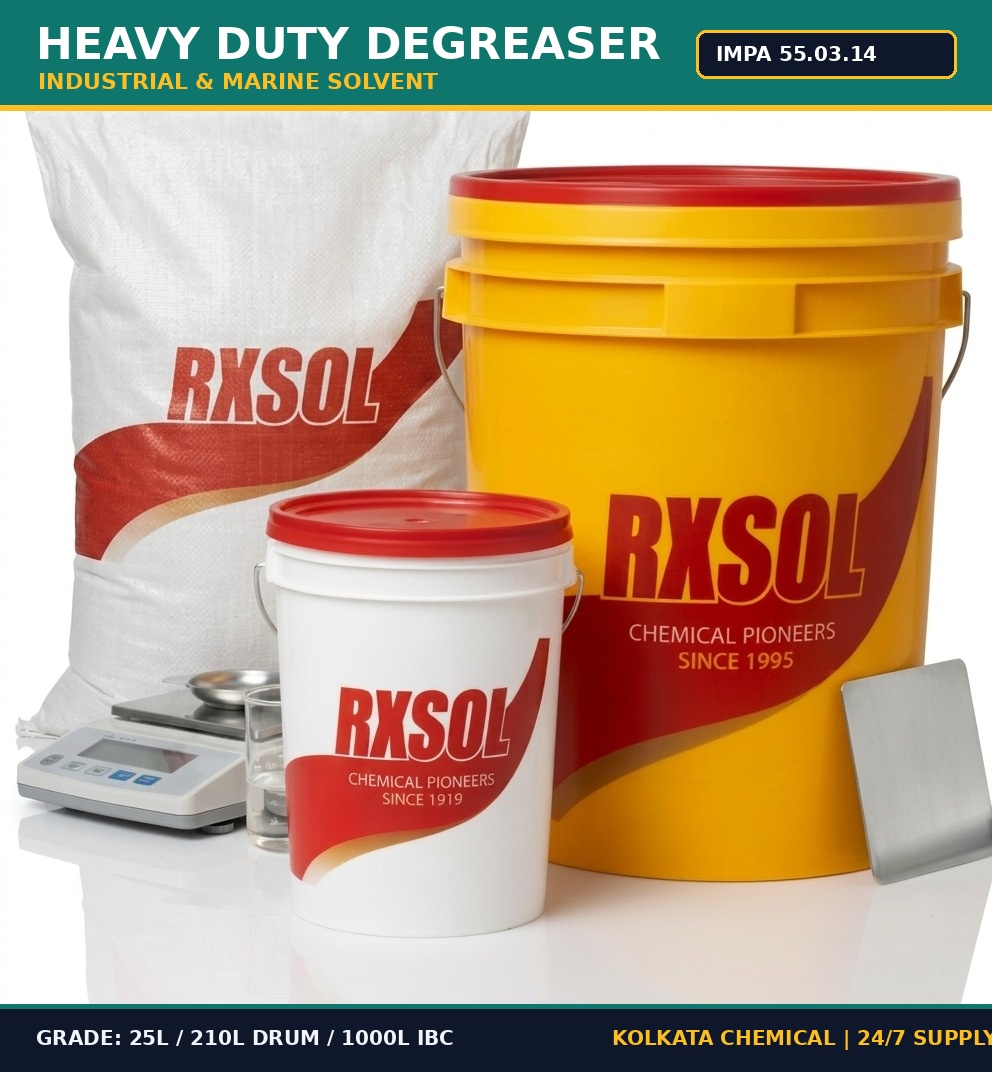
RXSOL-16-1004-020 is a heavy duty solution of emulsifiers, penetrating agents with an extremely high solvency based product which is useful for Bitumen, asphalt and coaltar cleaning . Coal Tar Remover is Highly Concentrated to works fast during cleaning operation.
Fast acting and effective to specifically for cleaning such cargoes as coal tar, carbon black feed stock and cresols. . RXSOL-16-1004-025 functions via a unique dual mechanism. The penetrating agent reacts with particles and Coaltar / Bitumen / Asphalt containing component while the other part reacts with particles and emulsifiers for water mixing
Refer to technical datasheet .
Coal Tar Remover is useful product for cleaning of machinery metal parts and also helps to dissolve / clean coal tar during tank cleaning operation.
COAL TAR REMOVER is a solvent based cleaning emulsify liquid specialized to remove and clean bitumen, asphalt, carbonized coal tar, crude oil, Black Oil, benzene and many other petroleum based sludges.
Higher Concentration of COAL TAR REMOVER not only makes economical in use but also saves coal tar cleaning operation time.
Coal Tar Cleaner/Remover is chemicaly emulsifying cleaning agent which is effectively removaes coal tar, bitumen, crude petroleum benzine, Black oil etc. Also helps to emulsify bitumen asphalt to make emulsion.

| Product Name | Coal Tar Cleaner |
| Part Number |
RXSOL-16-1004-025 |
Company Details :
RX MARINE INTERNATIONAL
105, A wing , BSEL , TECH PARK.
VASHI ,NEW BOMBAY 400703 INDIA
Stock Point : Mumbai, Kandla, Chennai, Visakhapatnam, Gangavaram, Kolkata, Fujairah. Muscat, Kanya, Canada
| Phone | +91 22 65113333 / 5555 / 9999 / 27611360 |
| Fax | +91 22 2781 1318 :::AOH :0091 9821214367 |
| mail@rxmarine.com |

|
COMPONENTS-CHEMICAL NAMES AND COMMON NAMES
(Hazardous Components 1% or greater; Carcinogens 0.1% or greater)
|
CAS Number |
SARA
III LIST
|
Applicable PEL-OSHA |
Exposure Limits TLVACGIH |
Carcinogen
Ref. Source **
|
|
ETHYLENE GLYCOL MONOBUTYL ETHER |
111-76-2 | Yes | 25 | 25 | d |
| MONOCHLOROTOLUENE (MIXED ISOMERS) | 25168-05-2 | No | N/E | N/E | d |
| ORTHO ISOMER | 95-49-8 | No | N/E | 50 | d |
| PARA ISOMER | 106-43-4 | No | N/E | N/E | d |
| SOLVENT NAPHTHA (PETROLEUM) HEAVY AROMATIC | 64742-94-5 | No | N/E | N/E | d |

|
PRIMARY ROUTES OF ENTRY: |
INHALATION, INGESTION, SKIN ABSORPTION, EYE |
|
ACUTE EFFECTS |
Systemic: CNS depression producing headache, dizziness, numbness, loss of consciousness. |
|
Inhalation: |
Irritation of upper respiratory tract. Exposure to high concentrations may cause systemic toxicity. Aspiration into lungs can cause chemical pneumonitis |
|
Eye Contact: |
Irritation. |
|
Skin Contact: |
Dermal irritation & dermatitis attributable to defatting of skin. |
|
Ingestion: |
Irritation of gastrointestinal tract. See also systemic effects above |
| CHRONIC EFFECTS: | Chronic exposure to high concentrations may cause some liver or kidney disfunction |
| Medical Conditions Generally Aggravated by Exposure: | Liver or kidney disease. May aggravate pre-existing irritation. |

|
Eye Contact: |
Flush with water for 15 minutes. Get medical attention. |
|
Skin Contact: |
Flush skin with water then wash with soap and water. If irritation occurs, get medical attention. |
|
Inhalation: |
Remove to fresh air. If not breathing, administer artificial respiration. Get medical attention. |
|
Ingestion |
DO NOT INDUCE VOMITING. Drink 3 to 4 glasses of water. Get immediate medical attention. If vomiting occurs, keep head below hips to prevent aspiration. |

|
FLAMMABILITY as per USA FLAME PROJECTION TEST (aerosols) |
N/A
N/Auto Ignition TemperatureE
|
|
Auto Ignition Temperature
|
N/D |
| Flammability Limits in Air by % in Volume: | |
| % LEL: | N/D |
| % UEL: | N/D |
| FLASH POINT AND METHOD USED (non-aerosols): | 141ºF (TCC) |
| SPECIAL FIRE FIGHTING PROCEDURES: | Burning product may give off nox - ious & toxic fumes. Firefighters should wear NIOSH approved self -contained breathing apparatus. |
| EXTINGUISHER MEDIA: | Water fog, foam, dry chemical or CO2. Burning product may float on water. |
| Unusual Fire & Explosion Hazards: | Burning product may float on surface of water and spread fire to other areas. |

|
PERSONAL PRECAUTIONS |
Avoid contact with skin and eyes. Provide eyewash bottle with clean water. For personal protection, see section 8. |
|
ENVIRONMENTAL PRECAUTIONS |
Do not allow to enter drains, sewers or watercourses. If substance has entered a water course or sewer or contaminated soil or vegetation, advise the appropriate authorities. |
|
SPILL CLEAN UP METHODS |
Extinguish all ignition sources. Avoid sparks, flames, heat and smoking. Ventilate. Absorb in vermiculite, dry sand or earth and place into containers. Contact waste disposal services. |

|
Steps To Be Taken If Material Is Spilled Or Released: |
Do not allow large spills to contaminate sewers, ground or surface waters. Contain spill & soak up in inert absorbent material. Place in leak-proof containers for proper disposal. |
|
Waste Disposal Methods: |
Dispose of in accordance with all local, state and federal regulations |
| Precautions To Be Taken In Handling & Storage: | Store in original shipping containers. Keep closed when not in use. Shelf life 1 year. Protect from extreme heat and cold |
| Other Precautions &/or Special Hazards: | KEEP OUT OF REACH OF CHILDREN. Read & follow label directions. Do not cut, weld or drill on drums whether full, part full or empty. |

|
Respiratory Protection (specify type): |
None required under normal conditions of handling and use. |
|
Protective Gloves: |
Solvent resistant |
|
Eye Protection: |
Chemical goggles. |
| Ventilation Requirements: | Special ventilation not normally needed. If required to maintain concentrations below specified levels use explosion proof ventilation. |
| Other Protective Clothing & Equipment: | Solvent resistant, as needed. Eyewash station and safety shower |
| Hygienic Work Practices: | Do not eat, drink or smoke in work area. Wash hands after handling. |

| Physical Properties | Clear Liquid |
| Odour | Hydrocarbon |
|
Boiling Point: |
180°C |
|
Specific Gravity (H2O=1): |
0.85-0.91 |
|
Vapor Pressure: |
902 hPa at 20°C |
|
Vapor Pressure (Non-Aerosols)(mm Hg and Temperature): |
N/D |
|
Vapor Density (Air = 1): |
>1 |
| Evaporation Rate ( BUAC = 1): | 1 |
| Solubility in Water: | Insoluble |
| Water Reactive: | No |
| Appearance and Odor: | Clear amber, non-viscous liquid with aromatic solvent odor. |

|
STABILITY |
[ X ] STABLE [ ] UNSTABLE |
|
HAZARDOUS POLYMERIZATION |
[ ] WILL [ X ] WILL NOT OCCUR |
|
Incompatibility (Mat. to avoid): |
Strong oxidizing agents. |
| Conditions to Avoid: | Heat, sparks and open flame |
|
Hazardous Decomposition Products: |
Oxides of nitrogen, carbon, hydrogen chloride, unidentified organics. |

| Acute oral toxicity | Symptoms: Gastrointestinal disturbance, Risk of aspiration upon vomiting., Pulmonary failure possible after aspiration of vomit. |
| Acute dermal toxic | Acute toxicity estimate : 1,134 mg/kg |
| Skin corrosion | Drying-out effect resulting in rough and chapped skin. Mixture causes skin irritation. |
| Toxic Effects on Humans | Acute Potential Health Effects: Skin: Causes skin irritation. Can be absorbed through skin. Eyes: Causes eye irritation. Inhalation: Vapor causes respiratory tract and mucous membrane irritation. |
| Special Remarks on Chronic Effects on Humans | Detected in maternal milk in human. Passes through the placental barrier in animal. Embryotoxic and/or foetotoxic in animal. May cause adverse reproductive effects (male and femael fertility (spontaneous abortion and fetotoxicity) and birth defects based animal data. |
|
Further information After absorption: |
Headache, somnolence, Dizziness, euphoria, agitation, spasms, narcosis Effect potentiated by: ethanol Damage to: Kidney, Central nervous system, Liver |

| Toxicity to Fish | No information available. |
| COD and BOD 5 | Not Available |
| Products of Biodegradation: | No information available. |
| Mobility in soil | No information available. |
| Results of PBT and vPvB assessment | Substance(s) in the mixture do(es) not meet the criteria for PBT or vPvB according to Regulation (EC) No 1907/2006, Annex XIII, or a PBT/vPvB assessment was not conducted. |
| Other adverse effects |
Additional ecological information Discharge into the environment must be avoided. |

| Waste treatment Method | Waste material must be disposed of in accordance with the national and local regulations. Leave chemicals in original containers. No mixing with other waste. Handle uncleaned containers like the product itself |

DOT/ADR
| UN Number | 1993 |
| Proper shipping name | Combustible liquid, n.o.s. (Distillates, Hydrotreated Heavy Naphthenic, Heavy Aromatic) |
| Hazard Class | Combustible liq |
| Packing group | III |
IATA
| UN Number | 1993 |
| Proper shipping name | Combustible liquid, n.o.s. (Distillates, Hydrotreated Heavy Naphthenic, Heavy Aromatic) |
| Hazard Class | Combustible liq |
| Packing group | III |
IMDG/IMO
| UN Number | 1993 |
| Proper shipping name | Combustible liquid, n.o.s. (Distillates, Hydrotreated Heavy Naphthenic, Heavy Aromatic) |
| Hazard Class | 8 |
| Packing group | III |
| Special precautions for user - |
Read safety instructions, SDS and emergency procedures before handling. |
|
Transport Annex II of MARPOL 73/78 and the IBC Code : |
Not established. |

| Fedral and State Regulation | Commission Decision 2000/532/EC as amended by Decision 2001/118/EC establishing a list of wastes and hazardous waste pursuant to Council Directive 75/442/EEC on waste and Directive 91/689/EEC on hazardous waste with amendments. |
| Guidance | Workplace Exposure Limits EH40. Approved Classification and Labelling Guide (Sixth edition) L131. Safety Data Sheets for Substances and Preparations. Health and environmental listings |
| Health and environmental listings | Regulation (EC) 689/2008 of the European Parliament and of the Council of 17 June 2008 concerning the export and import of Cleaning chemicals (as amended). Water hazard classification . |
| Chemical safety assessment | No chemical safety assessment has been carried out. |
| HMIS | |
| Health Hazard | : 3 |
| Fire Hazard | : 3 |
| Reactivity | : 0 |
| Personal Protection | : H |
| Fire : | |
| Health Hazard | : 3 |
| Fire Hazard | : 3 |
| Reactivity | : 0 |
| Specific Hazard | : .. |

| Other Information |
The information above is believed to be accurate and represents the best information currently available to us. However, we make no warranty of merchantability or any other warranty, express or implied, with respect to such information, and we assume no liability resulting from its use. Users should make their own investigations to determine the suitability of the information for their particular purposes. In no event shall be liable for any claims, losses, or damages of any third party or for lost profits or any special, indirect, incidental, consequential or exemplary damages, howsoever arising, even if RX Marine International has been advised of the possibility of such damages. DISCLAIMER OF LIABILITY :The information in this SDS was obtained from sources which we believe are reliable. However, the information is provided without any warranty, express or implied, regarding its correctness. The conditions or methods of handling, storage, use or disposal of the product are beyond our control and may be beyond our knowledge. For this and other reasons, we do not assume responsibility and expressly disclaim liability for loss, damage or expense arising out of or in any way connected with the handling, storage, use or disposal of the product. This MSDS was prepared and is to be used only for this product. If the product is used as a component in another product, this MSDS information may not be applicable. |