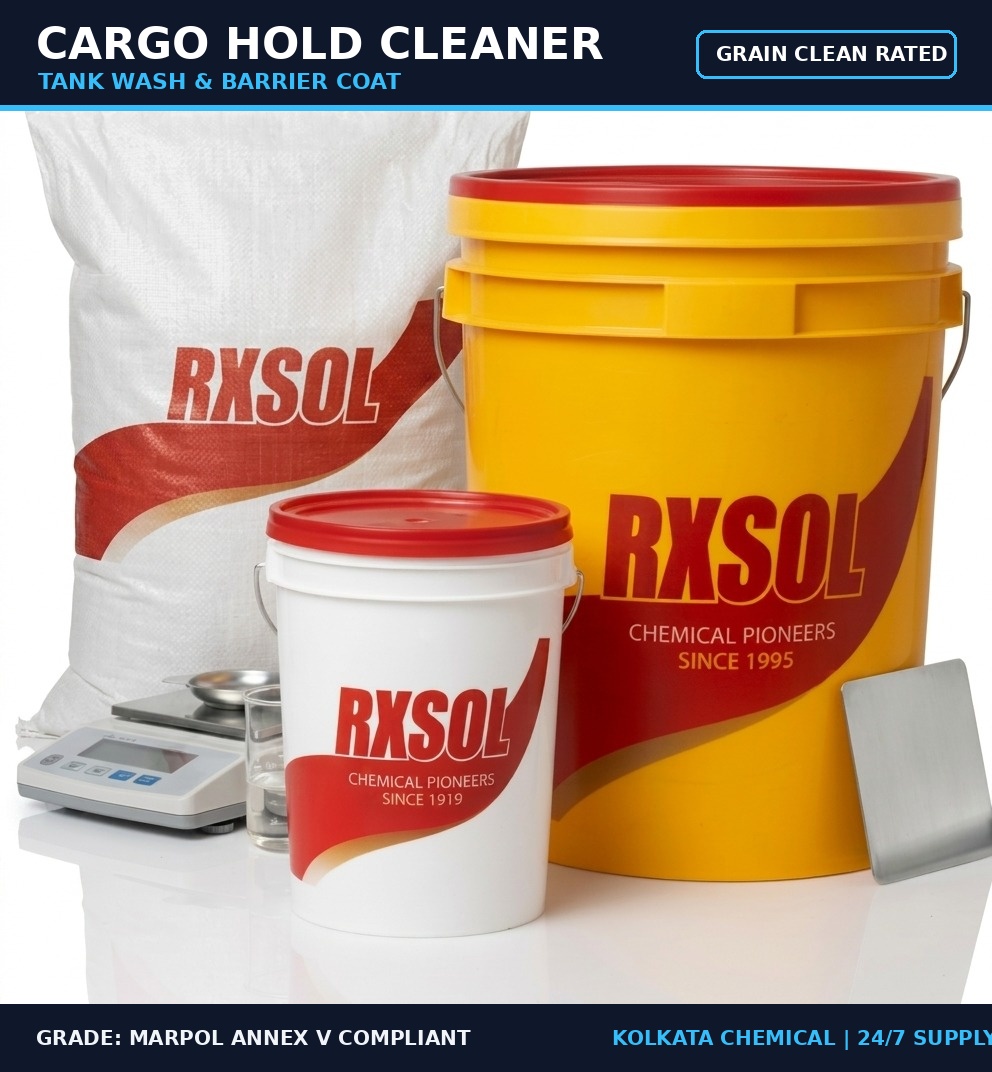
White deliquescent solid, chiefly in the form of beads or pellets. Hazard: Corrosive to tissue in the presence of moiture. Strong irritant to tissue (eyes, skin, mucous membrane.) Used as a detergent.
Sodium Hydroxide is a whitish solid, sold in Pellets, Flakes, and Granular form.
It is highly soluble in water, with a lower solubility in ethanol and methanol, but is insoluble in ether and other non-polar solvents.

| Product Name | : | RXSOL-19-1498-025 |
| Product Type | : | Caustic Soda Flake |
Company Details:
RX MARINE INTERNATIONAL
105, A wing , BSEL , TECH PARK.
VASHI ,NEW BOMBAY 400703 INDIA
Stock Points: Mumbai, Kandla, Kolkata, Vishakhapatnam, Chennai, Fujairah, Muscat Kenya, Canada
| Phone | : | +91 22 65113333 / 5555 / 9999 / 27611360 |
| Fax | : | +91 22 2781 1318 :::AOH :0091 9821214367 |
| : | mail@rxmarine.com |

| Name | CAS # | % by Weight |
| Sodium Hydroxide | 1310-73-2 | 100 |
Toxicological Data on Ingredients: Sodium hydroxide LD50: Not available. LC50: Not available.

| Potential Acute Health Effects: | |
| Very hazardous in case of skin contact (corrosive, irritant, permeator), of eye contact (irritant, corrosive), of ingestion, of inhalation. The amount of tissue damage depends on length of contact. Eye contact can result in corneal damage or blindness. Skin contact can produce inflammation and blistering. Inhalation of dust will produce irritation to gastro-intestinal or respiratory tract, characterized by burning, sneezing and coughing. Severe over-exposure can produce lung damage, choking, unconsciousness or death. Inflammation of the eye is characterized by redness, watering, and itching. Skin inflammation is characterized by itching, scaling, reddening, or, occasionally, blistering. | |
| Potential Chronic Health Effects : | |
| Carcinogenic Effects | Not available. |
| Mutagenic Effects | Mutagenic for mammalian somatic cells. |
| Teratogenic Effects | Not available. |
| Developmental Toxicity | Not available. |
The substance may be toxic to mucous membranes, upper respiratory tract, skin, eyes. Repeated or prolonged exposure to the substance can produce target organs damage. Repeated exposure of the eyes to a low level of dust can produce eye irritation. Repeated skin exposure can produce local skin destruction, or dermatitis. Repeated inhalation of dust can produce varying degree of respiratory irritation or lung damage.

|
Eye Contact |
Check for and remove any contact lenses. In case of contact, immediately flush eyes with plenty of water for at least 15 minutes. Cold water may be used. Get medical attention immediately. |
|
Skin Contact |
In case of contact, immediately flush skin with plenty of water for at least 15 minutes while removing contaminated clothing and shoes. Cover the irritated skin with an emollient. Cold water may be used.Wash clothing before reuse. Thoroughly clean shoes before reuse. Get medical attention immediately. |
|
Serious Skin Contact |
Wash with a disinfectant soap and cover the contaminated skin with an anti-bacterial cream. Seek medical attention. |
|
Inhalation |
If inhaled, remove to fresh air. If not breathing, give artificial respiration. If breathing is difficult, give oxygen. Get medical attention immediately. |
|
Serious Inhalation |
Evacuate the victim to a safe area as soon as possible. Loosen tight clothing such as a collar, tie, belt or waistband. If breathing is difficult, administer oxygen. If the victim is not breathing, perform mouth-to-mouth resuscitation. WARNING: It may be hazardous to the person providing aid to give mouth-to-mouth resuscitation when the inhaled material is toxic, infectious or corrosive. Seek immediate medical attention. |
|
Ingestion |
Do NOT induce vomiting unless directed to do so by medical personnel. Never give anything by mouth to anunconscious person. If large quantities of this material are swallowed, call a physician immediately. Loosen tight clothing such as a collar, tie, belt or waistband. |
|
Serious Ingestion |
Not available. |

| Flammability of the Product | Non-flammable. |
| Auto-Ignition Temperature | Not applicable. |
| Flash Points | Not applicable. |
| Flammable Limits | Not applicable. |
| Products of Combustion | Not available. |
| Fire Hazards in Presence of Various Substances | metals |
| Explosion Hazards in Presence of Various Substances: | |
| Risks of explosion of the product in presence of mechanical impact | Not available. |
| Risks of explosion of the product in presence of static discharge | Not available. |
| Slightly explosive in presence of heat. | |
| Fire Fighting Media and Instructions | Not available |
| Special Remarks on Fire Hazards: | |
| sodium hydroxide + zinc metal dust causes ignition of the latter. Under proper conditions of temperature, pressure and state of division, it can ignite or react violently with acetaldehyde, ally alcohol, allyl chloride, benzene-1,4-diol, chlorine trifluoride, 1,2 dichlorethylene, nitroethane, nitromethane, nitroparaffins, nitropropane, cinnamaldehyde, 2,2-dichloro-3,3-dimethylbutane. Sodium hydroxide in contact with water may generate enough heat to ignite adjacent combustible materials. Phosphorous boiled with NaOH yields mixed phosphines which may ignite spontanously in air. sodium hydroxide and cinnamaldehyde + heat may cause ignition. Reaction with certain metals releases flammable and explosive hydrogen gas. | |
| Special Remarks on Explosion Hazards: | |
| Sodium hydroxide reacts to form explosive products with ammonia + silver nitrate. Benzene extract of allyl benzenesulfonate prepared from allyl alcohol, and benzene sulfonyl chloride in presence of aquesous sodium hydroxide, under vacuum distillation, residue darkened and exploded. Sodium Hydroxde + impure tetrahydrofuran, which can contain peroxides, can cause serious explosions. Dry mixtures of sodium hydroxide and sodium tetrahydroborate liberate hydrogen explosively at 230-270 deg. C. Sodium Hydroxide reacts with sodium salt of trichlorophenol + methyl alcohol + trichlorobenzene + heat to cause an explosion. | |

|
Small Spill |
Use appropriate tools to put the spilled solid in a convenient waste disposal container. If necessary: Neutralize the residue with a dilute solution of acetic acid. |
|
Large Spill |
Stop leak if without risk. Do not get water inside container. Do not touch spilled material. Use water spray to reduce vapors. Prevent entry into sewers, basements or confined areas; dike if needed. Call for assistance on disposal. Neutralize the residue with a dilute solution of acetic acid. Be careful that the product is not presentv at a concentration level above TLV. Check TLV on the MSDS and with local authorities. |

|
Precautions |
Keep container dry. Do not breathe dust. Never add water to this product. In case of insufficient ventilation, wear suitable respiratory equipment. If you feel unwell, seek medical attention and show the label when possible. Avoid contact with skin and eyes. Keep away from incompatible -s such as oxidizing agents, reducing agents, metals, acids, alkalis, moisture. |
|
Storage |
Keep container tightly closed. Keep container in a cool, well-ventilated area. Hygroscopic. Deliquescent. |

| Engineering Controls | Use process enclosures, local exhaust ventilation, or other engineering controls to keep airborne levels below recommended exposure limits. If user operations generate dust, fume or mist, use ventilation to keep exposure to airborne contaminants below the exposure limit. |
| Personal Protection | Splash goggles. Synthetic apron. Vapor and dust respirator. Be sure to use an approved / certified respirator or equivalent. Gloves. |
| Personal Protection in Case of a Large Spill: | |
|
Splash goggles. Full suit. Vapor and dust respirator. Boots. Gloves. A self contained breathing apparatus should be used to avoid inhalation of the product. Suggested protective clothing might not be sufficient; consult a specialist BEFORE handling this product. |
|
| Exposure Limits: | |
|
STEL: 2 (mg/m3) from ACGIH (TLV) [United States] TWA: 2 CEIL: 2 (mg/m3) from OSHA (PEL) [United States] |
|

| Physical state and appearance | Solid. (Deliquescent solid.) |
| Odor | Odorless. |
| Taste | Not available. |
| Molecular Weight | 40 g/mole |
| Color | White. |
| pH | (1% soln/water): 13.5 [Basic.] |
| Boiling Point | 1388°C (2530.4°F) |
| Melting Point | 323°C (613.4°F) |
| Critical Temperature | Not available. |
| Specific Gravity | 2.13 (Water = 1) |
| Vapor Pressure | Not applicable. |
| Vapor Density | Not available. |
| Volatility | Not available. |
| Odor Threshold | Not available. |
| Water/Oil Dist. Coeff. | Not available. |
| Ionicity (in Water) | Not available. |
| Dispersion Properties | See solubility in water. |
| Solubility | Easily soluble in cold water |

| Stability | The product is stable. |
| Instability Temperature | Not available. |
| Conditions of Instability | Incompatible materials, moisture, moist air |
| Incompatibility with various substances: | |
| Highly reactive with metals.Reactive with oxidizing agents, reducing agents, acids, alkalis, moisture. | |
| Corrosivity | Not available. |
| Special Remarks on Reactivity: | |
| Hygroscopic. Much heat is evolved when solid material is dissolved in water. Therefore cold water and caution must be used for this process. Sodium hydroxide solution and octanol + diborane during a work-up of a reaction mixture of oxime and diborane in tetrahyrofuran is very exothermic, a mild explosion being noted on one occassion. Reactive with water, acids (mineral, non-oxidizing, e.g. hydrochloric, hydrofluoric acid, muriatic acid, phosphoric), acids (mineral, oxidizing e.g. chromic acid, hypochlorous acid, nitric acid, sulfuric acid), acids (organic e.g. acetic acid, benzoic acid, formic acid, methanoic acid, oxalic acid), aldehydes (e.g. acetaldehyde, acrolein, chloral hydrate, foraldehyde), carbamates (e.g. carbanolate, carbofuran), esters (e.g. butyl acetate, ethyl acetate, propyl formate), halogenated organics (dibromoethane, hexachlorobenzene, methyl chloride, trichloroethylene), isocyanates (e.g. methyl isocyanate), ketones (acetone, acetophenone, MEK, MIBK), acid chlorides, strong bases, strong oxidizing agents, strong reducing agents, flammable liquids, powdered metals and metals (i.e aluminum, tin, zinc, hafnium, raney nickel), metals (alkali and alkaline e.g. cesium, potassium, sodium), metal compounds (toxic e.g. berylium, lead acetate, nickel carbonyl, tetraethyl lead), mitrides (e.g. potassium nitride, sodium nitride), nitriles (e.g. acetonitrile, methyl cyanide), nitro compounds (organic e.g. nitrobenzene, nitromethane), acetic anhydride, chlorohydrin, chlorosulfonic acid, ethylene cyanohydrin, glyoxal, hydrosulfuric acid, oleum, propiolactone, acylonitrile, phorosous pentoxide, chloroethanol, chloroform-methanol, tetrahydroborate, cyanogen azide, 1,2,4,5 tetrachlorobenzene, cinnamaldehyde. Reacts with formaldehyde hydroxide to yield formic acid, and hydrogen. | |
| Special Remarks on Corrosivity | Very caustic to aluminum and other metals in presence of moisture. |
| Polymerization | Will not occur. |

| Routes of Entry | Absorbed through skin. Dermal contact. Eye contact. Inhalation. Ingestion. | |
| Toxicity to Animals | ||
| LD50 | Not available. | |
| LC50 | Not available. | |
| Chronic Effects on Humans: | ||
| Mutagenic Effects | Mutagenic for mammalian somatic cells.May cause damage to the following organs: mucous membranes, upper respiratory tract, skin, eyes. | |
| Other Toxic Effects on Humans: | ||
| Extremely hazardous in case of inhalation (lung corrosive).Very hazardous in case of skin contact (corrosive, irritant, permeator), of eye contact (corrosive), of ingestion, . | ||
| Special Remarks on Toxicity to Animals: | ||
| Lowest Published Lethal Dose: | ||
| LDL [Rabbit] - Route | Oral; Dose: 500 mg/kg | |
| Special Remarks on Chronic Effects on Humans:May affect genetic material. Investigation as a mutagen (cytogenetic analysis) | ||
|
Special Remarks on other Toxic Effects on Humans: |
||

| Ecotoxicity | Not available. |
| BOD5 and COD | Not available. |
| Products of Biodegradation:Possibly hazardous short term degradation products are not likely. However, long term degradation products may arise. | |
| Toxicity of the Products of Biodegradation: The product itself and its products of degradation are not toxic | |
| Special Remarks on the Products of Biodegradation: Not available. | |

Waste Disposal: Waste must be disposed of in accordance with federal, state and local environmental
control regulations.

DOT Classification: Class 8: Corrosive material
Identification: : Sodium hydroxide, solid UNNA: 1823 PG: II
Special Provisions for Transport: Not available.

| Federal and State Regulations: | ||
| Illinois toxic substances disclosure to employee act | Sodium hydroxide | |
| Illinois chemical safety act | Sodium hydroxide | |
| New York release reporting list | Sodium hydroxide | |
| Rhode Island RTK hazardous substances | Sodium hydroxide | |
| Pennsylvania RTK | Sodium hydroxide | |
| Minnesota | Sodium hydroxide | |
| Massachusetts RTK | Sodium hydroxide | |
| New Jersey | Sodium hydroxide | |
| Louisiana spill reporting | Sodium hydroxide | |
| California Director's List of Hazardous Substances | Sodium hydroxide | |
| TSCA 8(b) inventory | Sodium hydroxide | |
| CERCLA: Hazardous substances.: Sodium hydroxide: 1000 lbs. (453.6 kg) | ||
| Other Regulations: | ||
| OSHA | Hazardous by definition of Hazard Communication Standard (29 CFR 1910.1200). | |
| EINECS | This product is on the European Inventory of Existing Commercial Chemical Substances. | |
| Other Classifications: | ||
| WHMIS (Canada): | CLASS E: Corrosive solid. | |
| DSCL (EEC): | ||
|
R35- Causes severe burns. S26- In case of contact with eyes, rinse mmediately with plenty of water and seek medical advice. S37/39- Wear suitable gloves and eye/face protection. S45- In case of accident or if you feel unwell, seek medical advice immediately (show the label where possible). |
||
| HMIS (U.S.A.): | ||
| Health Hazard | 3 | |
| Fire Hazard | 0 | |
| Reactivity | 2 | |
| Personal Protection | J | |
| Health | 3 | |
| Flammability | 0 | |
| Reactivity | 1 | |
| Specific hazard: | ||
| Protective Equipment: |
Gloves. Synthetic apron. Vapor and dust respirator. Be sure to use an approved/ certified respirator or equivalent. Wear appropriate respirator when ventilation is inadequate. Splash goggles. |
|

References: Not available.
Other Special Considerations: Not available.
The information above is believed to be accurate and represents the best information currently available to us. However, we make no warranty of merchantability or any other warranty, express or implied, with respect to such information, and we assume no liability resulting from its use. Users should make their own investigations to determine the suitability of the information for their particular purposes. In no event shall ScienceLab.com be liable for any claims, losses, or damages of any third party or for lost profits or any special, indirect, incidental, consequential or exemplary damages, howsoever arising, even if ScienceLab.com has been advised of the possibility of such damages.
DISCLAIMER OF LIABILITY :The information in this SDS was obtained from sources which we believe are reliable. However, the information is provided without any warranty, express or implied, regarding its correctness. The conditions or methods of handling, storage, use or disposal of the product are beyond our control and may be beyond our knowledge. For this and other reasons, we do not assume responsibility and expressly disclaim liability for loss, damage or expense arising out of or in any way connected with the handling, storage, use or disposal of the product. This MSDS was prepared and is to be used only for this product. If the product is used as a component in another product, this MSDS information may not be applicable.