Air Cooler Cleaning Chemical
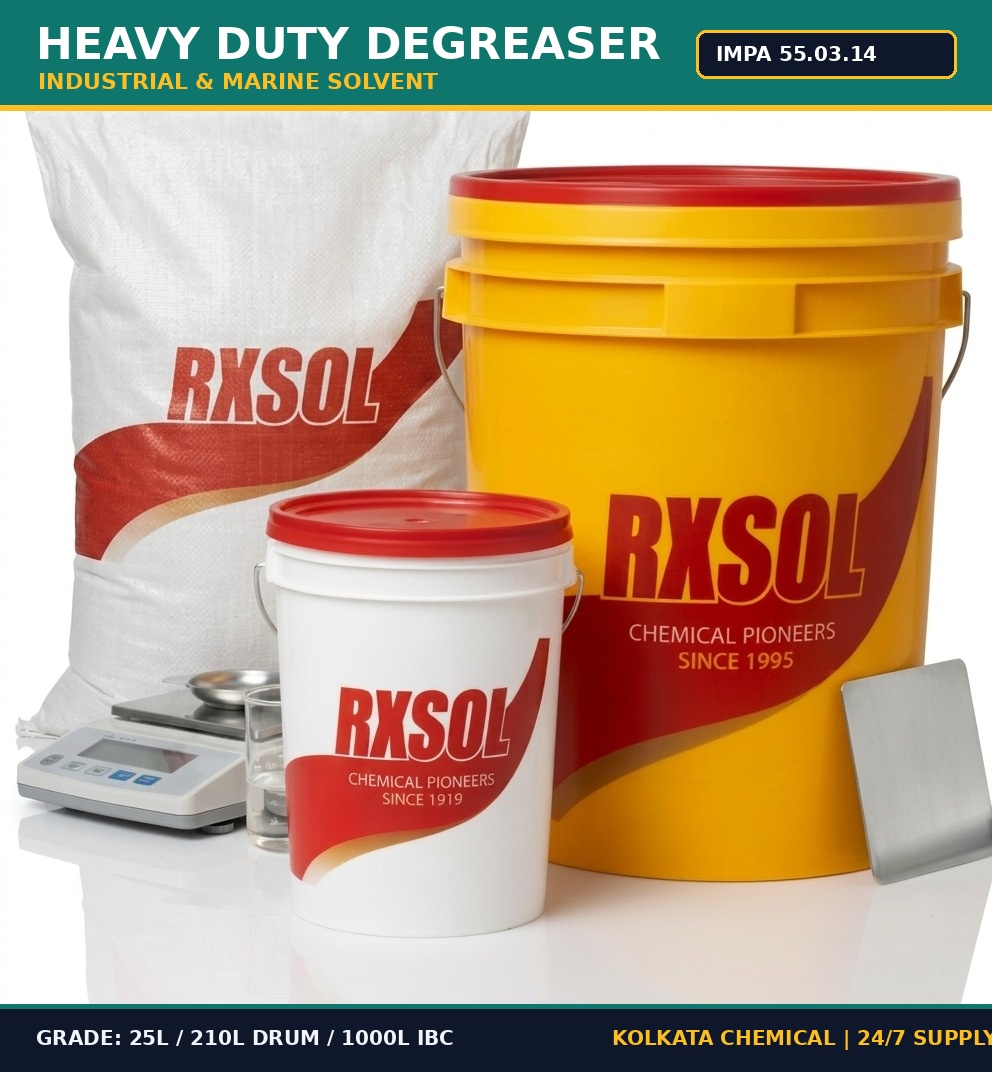
ACC9 AC coil cleaner is powerful solvent emulsion cleaner, easily dissolves soiled oil and grease deposit. Also helpful to clean all types of engine parts, turbo chargers of diesel engines. During the operation, the fins & tubes of the main engine ai

Air Cooler Cleaning Chemicals ACC9 AC coil cleaner is a powerful solvent emulsion cleaner, easily dissolves soiled oil and grease deposits. Also helpful to clean all types of engine parts, turbochargers of diesel engines.

During the operation, the fins & tubes of the main engine air cooler become fouled with oil, grease, dust, and carbonaceous deposit, which will affect cooling efficiency.

Very effective TURBOCHARGER & AIR COOLER CLEANING

AIR COOLER CLEANING CHEMICAL is a concentrated liquid solution of aromatic hydrocarbons, powerful surfactants, corrosion inhibitors, and strong emulsifying.

Application

During the operation, the fins & tubes of the main engine air cooler which become fouled with oil, grease, dust and carbonaceous deposit, which will affect cooler efficiency and damage the system.

RXSOL-54-1048-020 ( www.rxmarine.com/safe-acid-descalex-liquid-20-ltr ) is a powerful dissolving agent of calcium carbonate. Therefore, it is better to use RXSOL-54-1048-020  to do circulating cleaning at an early stage before the scales build up and block the tube, or regular cleaning is recommended as well. It is impossible to do a circulating cleaning when the tube is completely blocked.

Dose

Dirt attached on air-side fins of air coolers are a mix of carbonaceous particles such as soot and oil mist of unburned fuel components. 
Carbonaceous particles can be removed by Alkaline Cleaners Part No. RXSOL-16-1040-025 ( www.rxmarine.com/alkaline-air-cooler-cleaner ) and oil mist can be removed by oil based cleaners. However, it is very difficult to remove the mix of these substances. If you use an alkaline cleaner, oil will repel the water based alkaline cleaner; if you use oil based cleaner, carbonaceous particles will get in the way and stop oil from being removed.

This cleaners designed to remove both carbonaceous and oil simultaneously. An effective cleaning method is to immerse one side to remove the loose stains first, and then immerse the other side. This method can efficiently remove dirt and prevent swollen dirt peeled from fins from blocking the spaces between fins.

Dirt in tubes of seawater side

White scales attached on the seawater side of air coolers of many vessels. We found that in most cases, the main component of the scales is calcium carbonate and there is also a small amount of calcium sulfate. Therefore in most cases, if you dissolve the calcium carbonate the scales will be removed.

However, if the amount of scales is large enough to block the tube, the cylindrical scale will usually have calcium carbonate on the outside (the side that is in contact with tube) and calcium sulfate in the center (part that seawater passes through). Calcium sulfate is easier to be formed when the temperature goes higher.

When the amount of scales increases, the contact area of scale and cleaner is very small and a longer time of dissolution is required. Calcium sulfate cannot be dissolved by an acid cleaner.

Note

FREE from ACID
Polymer based cleaner, which will result extra shinning and smooth feeling on surface.

Multiple action of RXSOL-16-0009-025 increases its popularity, And this product also can be use for DEGREASING and Carbon removal action.

Very popular and Effective cleaner for air coolers, scavenging air systems and turbo chargers of diesel engines, Coils of AHU, FCU, Air Conditioners (Indoor and Outdoor), Car Condenser and Radiator, Air Cooled Chillers, Air Cooled Condensers, Air Cooler Tube Bundle etc. 

Packing sizes
5 ltr, 10 ltr, 20 ltr, 25 ltr, 35 ltr, 210 ltr. mail us to get best price of ACC9
MSDS

Product Name               Air Cooler Cleaning Chemical
Part Number   RXSOL-16-0009-025

Company Details:

RX MARINE INTERNATIONAL
105, A wing , BSEL , TECH PARK.
VASHI ,NEW BOMBAY 400703 INDIA

Branch : Kandla, Mumbai , Chennai, Vizag, Kolkata, UAE , OMAN , CANADA and KENYA  

Phone +91 22 20871200 - 1400
Fax +91 22 27612100 :::AOH :0091 9821214367
Email mail@rxmarine.com
Website www.rxmraine.com

Chemical  Name                            CAS                    EC number          Weight                 
Hydrocarbons, C9-C12, n-alkanes, isoalkanes, cyclics, aromatics (2- 25%)   64742-82-1 -- 30% - 50%
2-Propylheptanol ethoxylate  160875-66-1 -- 1% - 10%
Hydrocarbons, C9, aromatics  64742-95-6 -- 50% - 70% 

Signal Word  Danger.
Hazard Statements H226: Flammable liquid and vapour. H304: May be fatal if swallowed and enters airways. H318: Causes serious eye damage. H335: May cause respiratory irritation. H336: May cause drowsiness or dizziness. H372: Causes damage to organs through prolonged or repeated exposure. H411: Toxic to aquatic life with long lasting effects. EUH066: Repeated exposure may cause skin dryness or cracking.
P280 Wear    protective gloves.P305 + P351 + P338 Wear eye protection/ face protection. IF IN EYES: Rinse cautiously with water for several minutes. Remove contact lenses, if present and easy to do. Continue rinsing.
Precautionary statements                  Response/Prevention/Storage/Disposal P102: Keep out of reach of children. P210: Keep away from heat/sparks/open flames/hot surfaces. - No smoking. P233: Keep container tightly closed. P240: Ground/bond container and receiving equipment. P241: Use explosion-proof electrical/ventilating/lighting/equipment. P242: Use only non-sparking tools. P243: Take precautionary measures against static discharge. P260: Do not breathe fume/mist/vapours/spray. P261: Avoid breathing dust/fume/gas/mist/vapours/spray. P271: Use only outdoors or in a well-ventilated area. P273: Avoid release to the environment. P280: Wear protective gloves/ eye protection/ face protection. P403 + P233: Store in a well ventilated place. Keep container tightly closed. P403 + P235: Store in a well ventilated place. Keep cool.
Classification of the substance or mixture Not a hazardous substance or mixture according to Regulation (EC) No 1272/2008.
Supplemental Hazard      Statements None
Other hazards  Health Hazards: Repeated exposure may cause skin dryness or cracking. Possibility of organ or organ system damage from prolonged exposure; see Chapter 11 for details. Target organ(s): Auditory system. Safety Hazards: In use, may form flammable/explosive vapour-air mixture. This material is a static accumulator. Even with proper grounding and bonding, this material can still accumulate an electrostatic charge. If sufficient charge is allowed to accumulate, electrostatic discharge and ignition of flammable airvapour mixtures can occur. 

General advice Not expected to be a health hazard when used under normal conditions.
If inhaled  After inhalation: fresh air. 
Eye Contact Flush eye with copious quantities of water. If persistent irritation occurs, obtain medical attention.
Swallowed After swallowing: immediately make victim drink water (two glasses at most). Consult a physician.
Skin Contact Remove contaminated clothing. Flush exposed area with water and follow by washing with soap if available. If persistent irritation occurs, obtain medical attention.
Inhalation Remove to fresh air. If rapid recovery does not occur, transport to nearest medical facility for additional treatment.
Ingestion If swallowed, do not induce vomiting: transport to nearest medical facility for additional treatment. If vomiting occurs spontaneously, keep head below hips to prevent aspiration. If any of the following delayed signs and symptoms appear within the next 6 hours, transport to the nearest medical facility: fever greater than 101° F (38.3° C), shortness of breath, chest congestion or continued coughing or wheezing. 
Most important symptoms and effects, both acute and delaye If material enters lungs, signs and symptoms may include coughing, choking, wheezing, difficulty in breathing, chest congestion, shortness of breath, and/or fever. Auditory system effects may include temporary hearing loss and/or ringing in the ears.
Indication of any immediate medical attention and special treatment needed  Potential for chemical pneumonitis. Call a doctor or poison control center for guidance.

Flammability                                                  May be combustible at high temperature.
Flash Point Higher than 93.3°C (200°F).
Suitable extinguishing media Foam, water spray or fog. Dry chemical powder, carbon dioxide, sand or earth may be used for small fires only. Do not discharge extinguishing waters into the aquatic environment.
Unsuitable extinguishing media Do not use water in a jet.
Special hazards arising from the substance or mixture  Carbon monoxide may be evolved if incomplete combustion occurs. Will float and can be reignited on surface water. The vapour is heavier than air, spreads along the ground and distant ignition is possible.
Further information Prevent fire extinguishing water from contaminating surface water or the ground water system. 
Hazardous combustion
products
Fire may cause the evolution of Sulphur oxides, nitrogen oxides.
Advice for firefighters Wear full protective clothing and self-contained breathing apparatus. Additional Information: Keep adjacent containers cool by spraying with water.
Protective Equipment Use personal protective equipment.
Specific Hazards Arising from the Chemical Has a fire-promoting effect due to the release of oxygen.
Ambient fire may liberate hazardous vapours.

Personal precautions, protective equipment and emergency procedures Avoid contact with spilled or released material. Immediately remove all contaminated clothing. For guidance on selection of personal protective equipment see Chapter 8 of this Safety Data Sheet. For guidance on disposal of spilled material see Chapter 13 of this Safety Data Sheet.
Spillage Oxidizing material. Stop leak if without risk. Avoid contact with a combustible material (wood, paper, oil, clothing...). Keep substance damp using water spray. Do not touch spilled material. Prevent entry into sewers, basements or confined areas dike if needed. Eliminate all ignition sources. Call for assistance on disposal.
Personal Protection Advice for non-emergency personnel: Avoid inhalation of dusts. Evacuate the danger area, observe emergency procedures, consult an expert. Advice for emergency responders: Protective equipment see section 8.
Enviromental Precaution Shut off leaks, if possible without personal risks. Remove all possible sources of ignition in the surrounding area. Use appropriate containment (of product and fire fighting water) to avoid environmental contamination. Prevent from spreading or entering drains, ditches or rivers by using sand, earth, or other appropriate barriers. Attempt to disperse the vapour or to direct its flow to a safe location for example by using fog sprays. Take precautionary measures against static discharge. Ensure electrical continuity by bonding and grounding (earthing) all equipment. Monitor area with combustible gas indicator.
Methods and materials for
containment and cleaning
For small liquid spills ( 1 drum), transfer by mechanical means to a labelled, sealable container for product recovery or safe disposal. Allow residues to evaporate or soak up with an appropriate absorbent material and dispose of safely. Remove contaminated soil and dispose of safely. For large liquid spills (> 1 drum), transfer by mechanical means such as vacuum truck to a salvage tank for recovery or safe disposal. Do not flush away residues with water. Retain as contaminated waste. Allow residues to evaporate or soak up with an appropriate absorbent material and dispose of safely. Remove contaminated soil and dispose of safely

Advice on safe handling  Work under hood. Do not inhale substance/mixture.
Advice on protection against fire and explosion Keep away from open flames, hot surfaces and sources of ignition. 
Incompatible materials  Keep away from alkalis, strong oxidizing agents and metals. Provide containment walls of adequate capacity to hold any accidental spills. 
Hygiene measures Immediately change contaminated clothing. Apply preventive skin protection. Wash hands and face after working with substance. For precautions see section 2.2.
Precautions for     safe handling Extinguish any naked flames. Do not smoke. Remove ignition sources. Avoid sparks. Avoid contact with skin, eyes and clothing. Even with proper grounding and bonding, this material can still accumulate an electrostatic charge. If sufficient charge is allowed to accumulate, electrostatic discharge and ignition of flammable air-vapour mixtures can occur. Be aware of handling operations that may give rise to additional hazards that result from the accumulation of static charges. These include but are not limited to pumping (especially turbulent flow), mixing, filtering, splash filling, cleaning and filling of tanks and containers, sampling, switch loading, gauging, vacuum truck operations, and mechanical movements. These activities may lead to static discharge e.g. spark formation. Restrict line velocity during pumping in order to avoid generation of electrostatic discharge (= 1 m/s until fill pipe submerged to twice its diameter, then = 7 m/s). Avoid splash filling. Do NOT use compressed air for filling, discharging, or handling operations.
Conditions for safe storage, including any incompatibilities  Electrostatic charges will be generated during pumping. Electrostatic discharge may cause fire. Ensure electrical continuity by bonding and grounding (earthing) all equipment to reduce the risk. The vapours in the head space of the storage vessel may lie in the flammable/explosive range and hence may be flammable. Must be stored in a diked (bunded) wellventilated area, away from sunlight, ignition sources and other sources of heat. Bulk storage tanks should be diked (bunded). Keep away from aerosols, flammables, oxidizing agents, corrosives and from other flammable products which are not harmful or toxic to man or to the environment. Storage Temperature: Ambient.
Storage conditions Tightly closed. Dry.
Storage class Storage class (TRGS 510): 13: Non Combustible Solids
Specific end     use(s) Apart from the uses mentioned in section 1.2 no other specific uses are stipulated 
Handling Keep away from heat. Keep away from sources of ignition. Keep away from combustible material.. Empty containers pose a fire risk, evaporate the residue under a fume hood. Ground all equipment containing material. Do not ingest. Do not breathe dust. Wear suitable protective clothing. In case of insufficient ventilation, wear suitable respiratory equipment. If ingested, seek medical advice immediately and show the container or the label. Avoid contact with skin and eyes. Keep away from incompatibles such as reducing agents, combustible materials, organic materials, metals
Advice on general occupational hygiene Containers, even those that have been emptied, can contain explosive vapours. Do not cut, drill, grind, weld or perform similar operations on or near containers.
Requirements for storage  Keep in cool and store under shade. 
Additional Information Ensure that all local regulations regarding handling and storage facilities are followed. See additional references that provide safe handling practices for liquids that are determined to be static accumulators: American Petroleum Institute 2003 (Protection Against Ignitions Arising out of Static, Lightning and Stray Currents) or National Fire Protection Agency 77 (Recommended Practices on Static Electricity). CENELEC CLC/TR 50404 (Electrostatics – Code of practice for the avoidance of hazards due to static electricity)

Occupational Exposure Limits 

Material                                                    

Determinant                          

Sampling time BEI      Reference      
Benzene                              t,t-Muconic acid in Creatinine in urine  Sampling time: End of shift 500 µg/g          ACGIH BEL (2008)                                       
  SPhenylmercapturic acid in Creatinine in urine  Sampling time: End of        shift.  25 µg/g ACGIH BEL (2008)
Xylene, Mixed Isomers Methylhippuric acids in Creatinine in urine Sampling time: End of shift 1.5 g/g ACGIH BEL (2009) 
  Methylhippuric acids in Creatinine in urine Sampling time: End of shift.  650 mmol/mol  UKEH40BMGV (2005)
Exposure controls  General Information The level of protection and types of controls necessary will vary depending upon potential exposure conditions. Select controls based on a risk assessment of local circumstances. Appropriate measures include: Adequate explosion-proof ventilation to control airborne concentrations below the exposure guidelines/limits. Eye washes and showers for emergency use. Read in conjunction with the Exposure Scenario for your specific use contained in the Annex. Do not ingest. If swallowed then seek immediate medical assistance. If repeated and/or prolonged skin exposure to the substance is likely, then wear suitable gloves tested to EN374 and provide employee skin care programmes.
Engineering Control Use process enclosures, local exhaust ventilation, or other engineering controls to keep airborne levels below recommended exposure limits. If user operations generate dust, fume or mist, use ventilation to keep exposure to airborne contaminants below the exposure limit.
Eye/face protection Monogoggles (EN166) Chemical splash goggles (chemical monogoggles).
Body Protection Use protective clothing which is chemical resistant to this material. Safety shoes and boots should also be chemical resistant. Wear antistatic and flame retardant clothing.
Hand protection Where hand contact with the product may occur the use of gloves approved to relevant standards (e.g. Europe: EN374, US: F739, AS/NZS:2161) made from the following materials may provide suitable chemical protection. Longer term protection: Nitrile rubber gloves. Incidental contact/Splash protection: PVC or neoprene rubber gloves Personal hygiene is a key element of effective hand care. Gloves must only be worn on clean hands. After using gloves, hands should be washed and dried thoroughly. Application of a non-perfumed moisturizer is recommended.
Respiratory protection If engineering controls do not maintain airborne concentrations to a level which is adequate to protect worker health, select respiratory protection equipment suitable for the specific conditions of use and meeting relevant legislation. Check with respiratory protective equipment suppliers. Where air-filtering respirators are suitable, select an appropriate combination of mask and filter. Select a filter suitable for organic gases and vapors [Type A boiling point > 65°C (149°F)] meeting EN14387. Where air-filtering respirators are unsuitable (e.g., airborne concentrations are high, risk of oxygen deficiency, confined space) use appropriate positive pressure breathing apparatus.
Other Protection      Measure Handle in accordance with good industrial hygiene and safety practice.
Control of    environmental exposure Do not let product enter drains.
Thermal hazards No data available

Physical state Liquid
Colour Clear, colorless
Odour Aromatic solvent odor
Odor Threshold Not Applicable
pH No data available 
Melting Point No data available 
Boiling Point >1450C/1800C
Flash Point 460 C
Evaporation Rate Not Applicable
Flammability (solid, gas) No data available
Explosive limits No Data Available
Upper/lower flammability or explosive limits >0.6 % (v/v)/60 % (v/v)  
Autoignition temperature >450oC
Decomposition temperature  No data available
Vapour pressure 0.2-0.6 kPa at 20oC
Density No data available 
Vapour Density No Data Available
Freezing point                                                    No data available 
Specific Gravity 0.85 at 15oC
Partition coefficient No data available                                                                                                                           
Explosive properties No data available 
Solubility No data available 
Ignition temperature No information available.
Particle characteristics No data available 

Reactivity                        Not applicable. The product does not pose any further reactivity hazards in addition to those listed in the following subparagraph.
Stability Stable under normal conditions of use.
Possibility of hazardous reactions Data not available.
Conditions to avoid Avoid heat, sparks, open flames and other ignition sources.
Incompatible materials Strong oxidising agents.
Hazardous decomposition       products Under normal conditions of storage and use, hazardous decomposition products should not be produced.

Acute toxicity  LD50 Oral - Rat - male and female - 9.300 mg/kg (OECD Test Guideline 401) Symptoms: After uptake of large quantities:, Irritation of mucous membranes, Nausea LC50 Inhalation - Rat - male and female - 4 h - > 1.306 mg/l - dust/mist (OECD Test Guideline 403) Remarks: (highest concentration to be prepared) Symptoms: Possible damages:, Irritation symptoms in the respiratory tract. LD50 Dermal - Rabbit - female - 20.000 mg/kg (OECD Test Guideline 402) 
Skin corrosion/irritation Not irritating to skin. Prolonged/repeated contact may cause defatting of the skin which can lead to dermatitis.
Serious eye      damage/eye       irritation  Expected to be non-irritating to eyes.
Respiratory or skin    sensitization  Not expected to be a sensitiser.
Toxicity to Animal WARNING: THE LC50 VALUES HEREUNDER ARE ESTIMATED ON THE Acute oral toxicity (LD50): 689 mg/kg [Rat].
Toxic Effects on         Human May cause damage to the following organs: upper respiratory tract. Other Toxic Effects on Humans: Hazardous in case of skin contact (irritant, sensitizer), of ingestion, of inhalation (lung irritant, lung sensitizer).
Carcinogenicity Carcinogenicity - No carcinogenic properties suspected. (IUCLID) 
Germ cell        mutagenicity  NA
Reproductive toxicity  Does not impair fertility. Not a developmental toxicant. Causes foetotoxicity in animals at doses which are maternally toxic.
Specific target organ toxicity - single      exposure Auditory system: prolonged and repeated exposures to high concentrations have resulted in hearing loss in rats. Solvent abuse and noise interaction in the work environment may cause hearing loss. (Xylene) Kidney: caused kidney effects in male rats which are not considered relevant to humans.
Special Remarks on other Toxi  Effects on Humans Acute Potential Health Effects: Skin: Causes skin irritation. May cause skin sensitization, an allergic reation, which becomes evident upon re-exposure to this material. Eyes: Causes eye irritation. Ingestion: Causes gastrointestinal (digestive) tract irritation with nausea, vomiting, and diarrhea. May be harmful if swallowed. Inhalation: Causes respiratory tract irritation. May cause chemical pneumonitis and pulmonary edema, inflammation, edema of bronchi and larynx. Chronic Potential Health Effects: Repeated or prolonged skin exposure may cause allergic reactions in sensitive individuals. Repeated or prolonged exposure by inhalation may affect respiration and metabolism.
Additional Information RTECS: AF3675000 Gastrointestinal disturbance To the best of our knowledge, the chemical, physical, and toxicological properties have not been thoroughly investigated. After uptake of large quantities: muscular symptoms agitation Convulsions Headache Tremors Nausea psychoses 
Endocrine disrupting           properties The substance/mixture does not contain components considered to have endocrine disrupting properties according to REACH Article 57(f) or Commission Delegated regulation (EU) 2017/2100 or Commission Regulation (EU) 2018/605 at levels of 0.1% or higher. Repeated dose toxicity - Rat - male - Oral - 2 yr - NOAEL (No observed adverse effect level) - 600 mg/kg RTECS: LS9625000 Gastrointestinal disturbance To the best of our knowledge, the chemical, physical, and toxicological properties have not been thoroughly investigated. 

Persistence and degradability Biodegradability aerobic - Exposure time 28 d Result: 67,5 % - Readily biodegradable. (OECD Test Guideline 301B) Theoretical oxygen demand 827 mg/g Remarks: (Lit.) Ratio BOD/ThBOD 34 % Remarks: (Lit.) 
Toxicity to fish  Semi-static test LC50 - Danio rerio (zebra fish) - > 100 mg/l - 96 h (OECD Test Guideline 203) 
Toxicity to daphnia and other aquatic invertebrates Semi-static test EC50 - Daphnia magna (Water flea) - > 100 mg/l - 48 h (OECD Test Guideline 202)
Toxicity to algae Static test EC50 - Pseudokirchneriella subcapitata - > 100 mg/l - 72 h (OECD Test Guideline 201) static test NOEC - Pseudokirchneriella subcapitata (green algae) - > 100 mg/l - 72 h (OECD Test Guideline 201) 
Eco Toxicity Not Available
COD and BOD 5 Not Available
Products Biodegradation The methods for determining the biological degradability are not applicable to inorganic substances.
Mobility in soil No Information available
Results of PBT and vPvB assessment This substance/mixture contains no components considered to be either persistent, bioaccumulative and toxic (PBT), or very persistent and very bioaccumulative (vPvB) at levels of 0.1% or higher.
Endocrine disrupting       properties The substance/mixture does not contain components considered to have endocrine disrupting properties according to REACH Article 57(f) or Commission Delegated regulation (EU) 2017/2100 or Commission Regulation (EU) 2018/605 at levels of 0.1% or higher
Other adverse effects No data available

Material Disposal Recover or recycle if possible. It is the responsibility of the waste generator to determine the toxicity and physical properties of the material generated to determine the proper waste classification and disposal methods in compliance with applicable regulations. Do not dispose into the environment, in drains or in water courses. Waste product should not be allowed to contaminate soil or water
Container Disposal Drain container thoroughly. After draining, vent in a safe place away from sparks and fire. Residues may cause an explosion hazard. Do not puncture, cut or weld uncleaned drums. Send to drum recoverer or metal reclaimer.
Local Legislation Disposal should be in accordance with applicable regional, national, and local laws and regulations. Local regulations may be more stringent than regional or national requirements and must be in compliance. 
Waste treatment      Method See www.retrologistik.com for processes regarding the return of chemicals and containers, or contact us there if you have further questions.

UN number ADR/RID:  1993        IMDG:     1993      IATA:    1993
Transport hazard class(es)      ADR/RID:    3             IMDG:       3           IATA:     3
Packaging group ADR/RID:      III              IMDG:      III         IATA:  III
Environmental hazards ADR/RID: No                  IMDG: No             IATA: No
Special precautions for user Tunnel restriction code : (C/E) 
Further information Not classified as dangerous in the meaning of transport regulations.
Transport in bulk according to IMOinstruments No data available

Inventory status Components are on the following inventories: Polymaleic acid: - US TSCA, Canadian DSL, EU EINECS, Australian AICS, Korean, Philippine PICCS and Chinese Xi irritant R 36/38 Irritant to eyes & skin R 41 Risk of serious damage to eyes S24/25 Avoid contact with skin and eyes S26/28 In case of contact eyes & skin, rinse with plenty water and seek medical advice Section 312/313: Not listed. Not listed under California proposition 65. 
Safety, health and environmental regulations/legislation specific for the substance or mixture If other regulatory information applies that is not already provided elsewhere in this safety data sheet, then it is described in this subsection.
Safety, health and environmental regulations specific for the product in question European Inventory of Existing Commercial Chemical Substances (EINECS) -Listed.EC Inventory Listed. United States Toxic Substances Control Act (TSCA) Inventory- Listed. China Catalog of Hazardous chemicals 2015 Not- Listed. New Zealand Inventory of Chemicals (NZIoC)Listed. PICCS -Listed. Vietnam National Chemical Inventory -Listed. IECSC Listed. Korea Existing Chemicals List (KECL) -Listed.
National legislation Seveso III: Directive 2012/18/EU of the European Parliament and of the Council on the control of major-accident hazards involving dangerous substances. : OXIDISING LIQUIDS AND SOLIDS : ENVIRONMENTAL HAZARDS 
Other regulations Take note of Dir 94/33/EC on the protection of young people at work.
Chemical Safety Assessment A CSA has been carried out for the raw materials in this product, from the raw materials manufacturers (when needed to be carried out). 

Other Information

The information above is believed to be accurate and represents the  best information   currently    available  to us.  However,   we   make no warranty of merchantability or any other warranty, express or implied, with respect to such information, and  weassume  no liability resulting from its use. Users should make  their  own  investigations  to determine the suitability of the information for their particular purposes. In no event shall be liable for any claims, losses, or damages of any third party or for lost profits or any special, indirect, incidental, consequential or exemplary damages, howsoever arising, even if Rx Marine International  has been advised of the possibility of such damages.

DISCLAIMER OF LIABILITY :The information in this SDS was obtained from sources which we believe are reliable. However, the information is provided without any warranty, express or implied, regarding its correctness. The conditions or methods of handling, storage, use or disposal of the product are beyond our control and may be beyond our knowledge. For this and other reasons, we do not assume responsibility and expressly disclaim liability for loss, damage or expense arising out of or in any way connected with the handling, storage, use or disposal of the product. This MSDS was prepared and is to be used only for this product. If the product is used as a component in another product, this MSDS information may not be applicable.

Need a quote for this product?

Tell us the grade, packing and quantity you need — we ship across India and to major ports.

Request a quote office@kolkatachemical.com